Dry Bag for Scuba Diving: Which Size Do You Need?
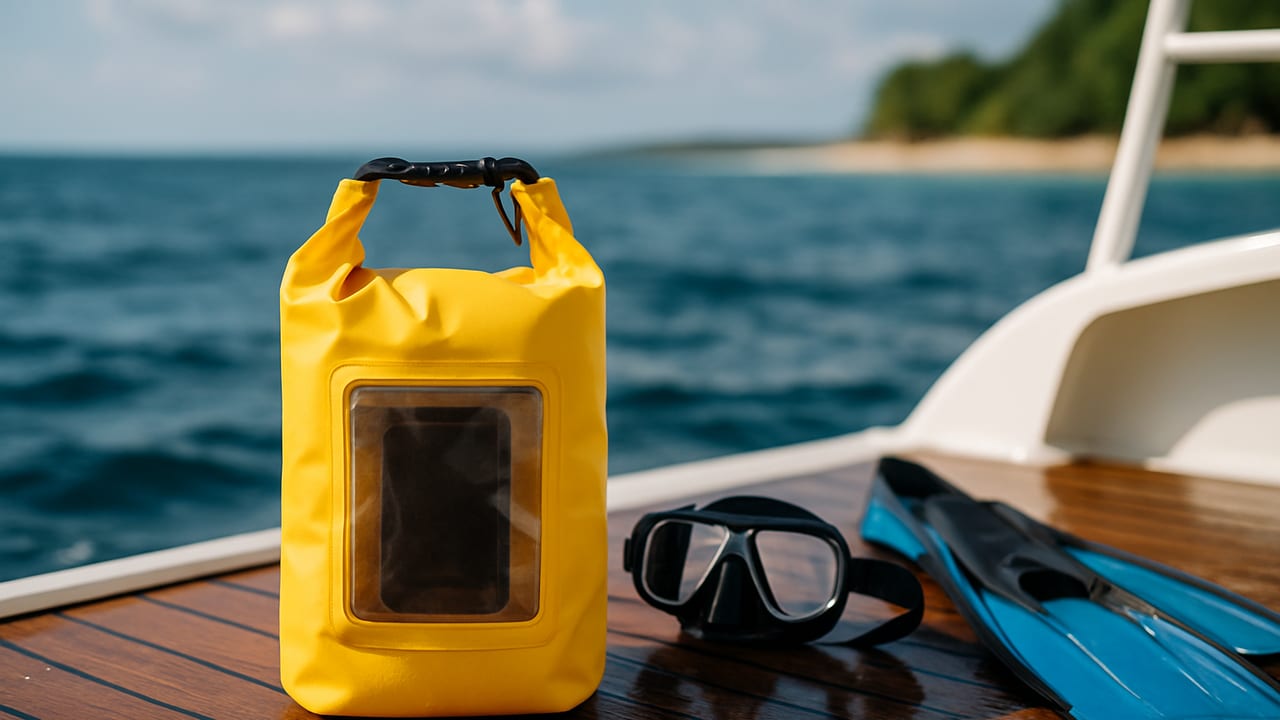
A dry bag for scuba diving isn’t one product — it’s at least three, depending on what you’re actually trying to keep dry. A 5-liter pouch for a phone and wallet solves a completely different problem than a 30-liter bag for a change of clothes on the boat, and both are different again from the 60-plus-liter mesh duffel divers use to haul a full set of gear to the dive site. Buying the wrong tier is the most common reason someone ends up disappointed with a “dry bag” that never had any waterproofing to begin with.
Why This Distinction Actually Matters
Get the tier wrong and the failure isn’t dramatic, just inconvenient. A soaked phone at the bottom of a mesh gear duffel is a familiar story precisely because that duffel was never built to keep water out — it was built to let a wetsuit drain and dry between dives, which is the opposite job. Buy a small waterproof pouch instead, expecting it to also carry your towel and a change of clothes, and you’ll be back at the dive shop within a season looking for something bigger.
Picture a fairly typical two-tank boat day: gear bag loaded in the truck before sunrise, a change of clothes and a towel for after, plus a phone and some cash you’d rather not leave in a rental car at the marina. That’s a composite scenario, not one specific trip, but it’s the shape of almost every dive-day packing decision — and it’s exactly the situation where knowing which tier of “dry bag” you need saves you from buying the wrong one twice.
So the useful lesson here is straightforward: there’s no single best dry bag for scuba diving, only the right size for the specific thing you’re protecting.
The Three Tiers That Actually Solve Different Problems
- The valuables pouch (3-10 liters). A small waterproof pouch, often with a clear front panel, sized for a phone, wallet, keys, and maybe a small camera. This is what clips to a boat rail or a bag strap during the dive itself. Expect to pay roughly $15-30 for a well-made one — the failure mode to watch for is a pouch marketed as waterproof that’s actually only water-resistant, which is fine for spray but not for a wave over the gunwale.
- The day bag (20-30 liters). A genuinely waterproof roll-top bag sized for a towel, a change of clothes, sunscreen, and the valuables pouch itself. This is the bag most divers picture when they search for a dry bag for scuba diving, and it typically runs $30-70 depending on material and closure hardware.
- The gear duffel (60+ liters). Sized to carry a BCD, regulator, wetsuit, fins, and mask to and from the dive site. Despite often being marketed alongside dry bags, most of these are mesh or vented — built to drain and air out wet gear, not to keep water from getting in. A true waterproof version exists for divers who need to protect gear from rain or spray in transit, and those run closer to $100-200.
None of these is a worse purchase than the others. They’re solving different problems, and a diver who travels regularly often ends up owning two of the three — a valuables pouch that lives permanently clipped inside the gear duffel.
How a Dry Bag Actually Keeps Water Out
The material itself is usually 210-1200 denier nylon or polyester, coated with polyurethane (PU) or PVC. Higher denier numbers mean a thicker, more abrasion-resistant base fabric, but the coating and seam construction matter at least as much as the number on the label — a heavily coated mid-denier fabric with welded seams will outlast an uncoated high-denier one in regular saltwater use.
That’s also the difference behind the three water-resistance categories worth knowing before you buy:
- Water-resistant bags shed spray and light rain but leak under sustained wet conditions or full submersion.
- Waterproof bags use sealed or welded seams with a roll-top or buckled closure, built to handle splashes and brief submersion.
- Submersible bags and hard cases are rated to stay sealed fully underwater for extended periods — genuinely useful for a camera housing, overkill for a towel and a set of keys.
Some dive-specific bags now publish an actual IP (ingress protection) rating rather than just the word “waterproof.” PADI’s rundown of its UNDA dry bag collection, for example, lists an IPX6 rating on its roll-top backpack — rated for a direct water jet, not full submersion — and an IP67 rating on its smaller phone pouch, which is rated for brief full submersion. A published IP number is a more useful comparison point between two bags than the unqualified word “waterproof” on its own.
Sealing It Properly Matters More Than the Bag Itself
Even a well-made dry bag leaks if it isn’t closed correctly, and this is the step most divers get wrong on the first few tries. Squeeze the excess air out, fold — not roll — the top down flat at least three times in the same direction, then clip the side buckles. NRS’s own instructions for sealing a roll-top dry bag make the same point: despite the name, folding flat rather than rolling like a sleeping bag is what actually creates the seal, and skipping a fold to save time is the single most common cause of a “waterproof” bag failing.
Keeping It Working After Every Dive
Saltwater is harder on a dry bag’s seal than the ocean water itself would suggest. Salt crystallizes in the folds of the roll-top closure and along stitched seams as the bag dries, and over repeated trips that buildup can stiffen the seal enough to let water through on a bag that sealed perfectly fine a season earlier. Rinsing the bag — inside and out, with particular attention to the closure — after every saltwater dive, then air-drying it fully before storing it rolled shut, is the entire maintenance routine. Skipping it doesn’t ruin a bag after one trip, but it’s the difference between a dry bag that lasts several seasons and one that needs replacing after one.
Flying With It: What Actually Needs to Go in Checked Luggage
A dry bag’s second job, for anyone traveling to a dive destination rather than diving somewhere local, is protecting gear in transit — and this is the part most dive-shop buying guides skip entirely. An empty or lightly packed dry bag is unremarkable as carry-on, and a small waterproof pouch is a genuinely good way to keep a dive computer or a regulator’s second stage away from spilled coffee and rough gate-check handling. What it can’t do is get a dive knife past security in your carry-on — TSA’s rules on sharp items require dive knives and spearguns to travel in checked luggage regardless of which bag they’re packed inside, the same rule that applies to any other knife.
If you’re checking the gear duffel instead, that’s where the knife, weights, and anything else with an edge should go — the carry-on dry bag is for what you don’t want handled roughly or want quick access to at the gate, not for everything sharp you own.
The Takeaway
Before searching for the best dry bag for scuba diving, decide which of the three problems you’re actually solving: a phone and wallet on the boat, a towel and change of clothes for the whole dive day, or a full set of gear in transit. Buy for that specific tier, seal it by folding rather than rolling, and rinse it after every saltwater trip. Do that, and the bag that seemed like a minor purchase decision turns out to be the one piece of gear that quietly keeps working, trip after trip.
If you’re building out the rest of a travel packing list around a dive trip, our guide to TSA-approved toiletry bags covers the carry-on liquids side of the same airport-security question this article touches on. And if the trip includes any time on dry land in wet conditions, our guide to waterproof hiking shoes covers the equivalent decision for your feet. The rest of our packs and bags reviews cover what else is worth packing around it, and our travel tips section covers the broader logistics of getting gear like this to the dive site in one piece.
Frequently asked questions
- Is a regular backpack fine for scuba diving instead of a dry bag?
- Only if nothing inside it needs to survive a splash, spray, or a wet bench on the boat. A standard backpack has stitched seams and exposed zippers that let water through eventually, which is fine for a spare towel but not for a phone, wallet, or camera. If you're bringing anything electronic on the boat, a genuinely waterproof bag is worth the small extra cost over a bag that merely resists a light rain.
- How do you properly seal a roll-top dry bag?
- Squeeze out the excess air, fold the top down flat at least three times in the same direction, then clip the buckles at each end. The name "roll-top" is a bit misleading — folding flat, not rolling like a yoga mat, is what actually creates the seal, and skipping a fold or two is the most common reason a dry bag leaks.
- What's the difference between waterproof, water-resistant, and submersible dry bags?
- Water-resistant bags shed spray and light rain but will leak if fully dunked. Waterproof bags, with sealed or welded seams and a proper roll-top closure, handle splashes and brief submersion. Submersible bags and boxes are rated to stay sealed even fully underwater for extended periods, which most divers only need for a housing around a camera, not for a towel and a set of car keys.
- What size dry bag do you actually need for a day of diving?
- A 3-10 liter pouch covers a phone, wallet, and keys. A 20-30 liter bag covers that plus a towel, a change of clothes, and a snack, which is what most divers actually want on the boat. Anything beyond that is really a gear-transport bag, not a dry bag in the sense of keeping specific valuables dry, and it's usually mesh rather than waterproof.
- Can a dry bag be used for other water activities besides diving?
- Yes, and that's part of what makes a mid-size one worth owning even if diving isn't a regular habit. The same roll-top bag that protects a phone on a dive boat works identically for kayaking, paddleboarding, sailing, or a rainy day of hiking — it's solving "keep specific items dry near water," not a diving-specific problem.
- How do you clean and maintain a dry bag after diving in saltwater?
- Rinse it inside and out with fresh water as soon as you reasonably can, paying attention to the seams and the roll-top closure itself, where salt crystals collect and can eventually stiffen the seal. Let it air-dry fully, ideally inverted, before you roll it closed for storage — packing it away damp is what shortens a dry bag's working life fastest.
- Are dry bags safe for a phone or camera?
- A quality waterproof dry bag is safe for a phone or basic point-and-shoot camera during normal boat use, but it's not a substitute for a proper underwater camera housing if the plan is to actually submerge it. For anything expensive or irreplaceable, double-bagging — a phone in its own small waterproof pouch, inside the larger dry bag — costs nothing and removes most of the risk from a single seal failing.
- Can you bring a dry bag as carry-on luggage when flying to a dive trip?
- Yes, an empty or lightly packed dry bag flies as carry-on without any issue, and it's a genuinely useful way to protect a dive computer or regulator from rough handling. Anything with a blade, including a dive knife, still has to go in checked luggage under standard security rules, regardless of which bag it's packed inside.