Is Kutaisi, Georgia Worth Visiting? An Honest Answer
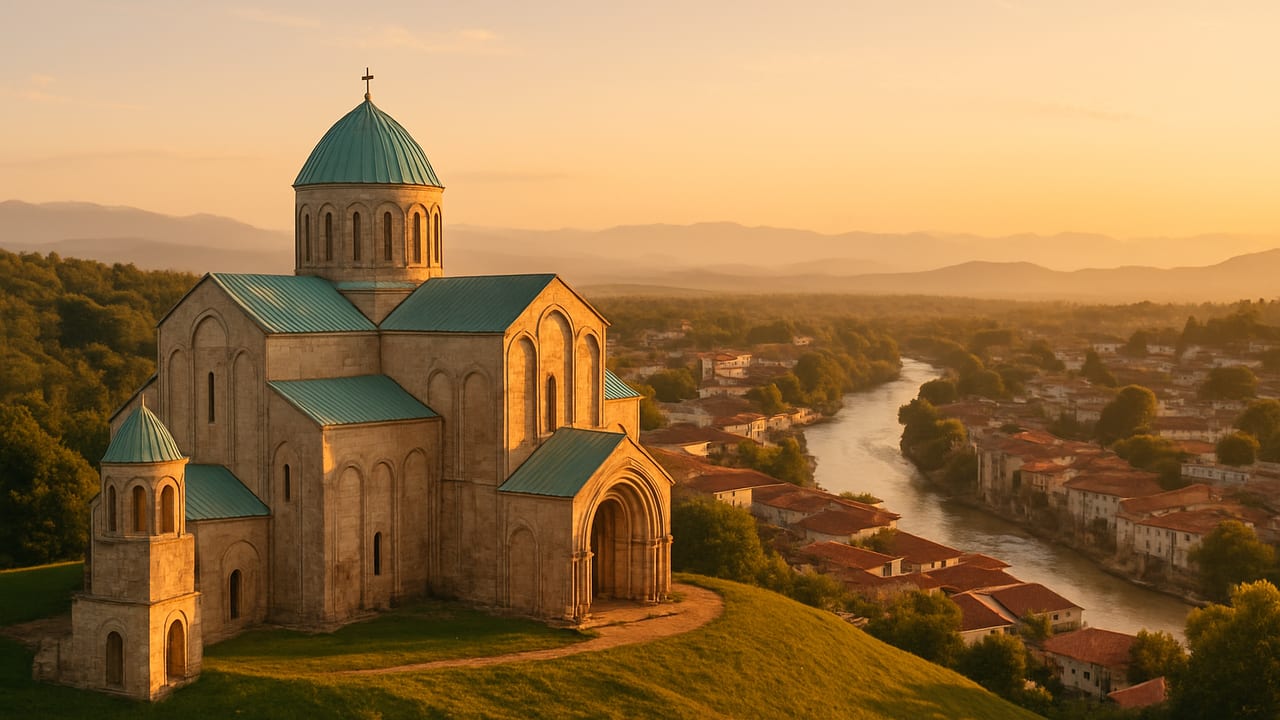
Yes, Kutaisi is worth visiting — but the honest answer depends heavily on why you’re already there. For the growing number of travelers who land at Kutaisi International Airport purely because a Wizz Air fare into Georgia was cheaper than one into Tbilisi, the more useful question isn’t whether Kutaisi is a great city in the abstract. It’s whether the town in front of you, the one you didn’t plan a trip around, deserves more than a taxi straight to the bus station.
Why This Question Keeps Coming Up
Kutaisi’s airport opened as a genuine passenger hub in 2012 and has since become Georgia’s main gateway for budget flights, with Wizz Air running direct routes to more than twenty cities across Europe. That’s changed who ends up standing in the arrivals hall. A decade ago, most Kutaisi visitors chose to go there. Now a large share arrive because the flight was the deciding factor, not the destination — and then have to figure out, often from the taxi queue, whether it’s worth building any time into the city itself.
That’s a different question from “should I visit Georgia’s second city,” and it deserves a different answer. It also explains why reviews of Kutaisi online are more mixed than reviews of Tbilisi or Batumi: a fair number of the people writing them never intended to be tourists there in the first place.
A Composite Case: The Layover That Became a Stop
Picture a fairly typical route: a budget flight lands at Kutaisi late morning, connecting onward to Western Europe two days later, with nothing booked in between beyond a hostel bed. That’s a composite scenario, not one specific trip, but it’s close to how a lot of Kutaisi visits actually start. Treated purely as a layover, the two days go to sleeping off jet lag and killing time near the hostel.
Travelers who treat that same gap as a real stop tend to do one thing differently: they walk up to Bagrati Cathedral on the hill above the old town in the first afternoon, more out of having nothing better to do than genuine interest. The cathedral’s history — an 11th-century church, part of a joint UNESCO listing with Gelati Monastery until reconstruction work got Bagrati itself delisted in 2017 — turns out to be more interesting up close than the drive-by version suggests, and the view back over the Rioni River is a reasonable payoff for a walk that wasn’t supposed to be the point of the day.
What was meant to be dead time between flights becomes, without much extra effort, a short but real visit.
The Pattern Worth Remembering
The lesson isn’t that Kutaisi secretly rivals Tbilisi as a destination — it doesn’t, and pretending otherwise does readers no favors. The lesson is that Kutaisi rewards almost any amount of unplanned time spent in it, because its genuine attractions sit close together and don’t demand a big time investment individually. A cathedral, a market, and a walk along the river can all happen in one afternoon without feeling rushed. That makes the “worth visiting” question less about whether Kutaisi deserves a dedicated trip, and more about whether you’re willing to spend the layover time you already have.
Who Kutaisi Is Actually Worth It For
That distinction is easier to apply as a short framework than as a single yes-or-no verdict:
- Travelers with a cheap flight in or out of Kutaisi. Worth at least a half-day. The old town and Bagrati Cathedral sit close enough to the airport road that a taxi and a couple of hours on foot is realistic even on a tight connection.
- Anyone chasing UNESCO sites and medieval history. Worth a full day or two. Gelati Monastery, founded in 1106 and still an active monastery, is the standout — genuinely one of the better-preserved medieval complexes in the Caucasus, and not a site you’d expect to find this close to a budget-airline runway.
- Day-trippers heading to Prometheus Cave, Okatse Canyon, or Martvili Canyon. Worth using as a base. All three sit within roughly an hour’s drive, and Kutaisi has more transport and tour options for reaching them than the smaller towns nearer the canyons themselves.
- Slow travelers and remote workers looking for a quieter base than Tbilisi. Worth considering, with a caveat: Kutaisi is noticeably cheaper and calmer than Tbilisi, but it doesn’t have Tbilisi’s coworking spaces, faster average internet, or established digital nomad community — expect to work from a café or your accommodation’s wifi rather than a dedicated space.
- Travelers who dislike smaller, rougher-around-the-edges cities. Consider skipping the extra days. Kutaisi doesn’t have Tbilisi’s polish or Batumi’s beachfront resort feel, and parts of the center show real wear. If that’s a dealbreaker for you elsewhere, it will be here too.
The Rough Edges, Honestly
Most Kutaisi write-ups lean heavily positive, which makes them less useful for deciding whether the city fits you specifically. The genuine complaints are worth naming rather than glossing over: parts of the old town need real upkeep and can feel neglected rather than charming, some transport touts around the bus station will quote inflated fares to obviously new arrivals, and Kutaisi’s tourist infrastructure — English signage, consistent opening hours, card payment — lags well behind Tbilisi’s. None of that makes Kutaisi unsafe or not worth the half-day above. It does mean going in expecting a working Georgian city rather than a polished tourist stop, and negotiating or confirming a taxi fare before you get in rather than after.
What There Actually Is to See
Beyond Bagrati Cathedral, the in-town list is short but genuine:
- Gelati Monastery, about 11 km outside the center, with 12th-century frescoes largely intact and an academy building that was once a major center of learning in the medieval Caucasus. Best reached by taxi or a short marshrutka ride, since there’s no direct city bus.
- The Green Market, a working produce and goods market rather than a tourist-facing craft bazaar — cheese, churchkhela (a traditional grape-and-nut candle-shaped candy), and dried fruit are the things actually worth buying.
- The White Bridge and riverside walkway, a pleasant stretch along the Rioni River with a scattering of street art, good for an evening walk without much planning.
- Prometheus Cave, roughly 20 minutes outside town, a limestone cave system with an optional underground boat tour. As of April 2026, the Agency of Protected Areas of Georgia’s official pricing lists a 40 GEL entrance fee for foreign visitors and a 30 GEL boat tour, both up from the older figures still floating around in a lot of travel guides — worth checking current rates before you budget the day.
- Okatse and Martvili Canyons, two separate gorge-and-waterfall day trips about an hour from Kutaisi, each with suspended walkways or raft rides; most visitors pick one rather than both in a single day given the driving time between them.
Getting There and Getting Around
Kutaisi International Airport is the main draw for budget travelers, with Wizz Air running year-round direct flights to cities including Berlin, Budapest, Warsaw, Athens, Milan, Rome, Barcelona, and Brussels, among others, plus seasonal routes that shift year to year. Fares regularly undercut equivalent flights into Tbilisi, which is the whole reason so many travelers end up asking whether the city itself is worth their time.
From Tbilisi, a direct train covers the roughly 230 km route in about four hours and is the most comfortable overland option. Marshrutkas run more frequently and cost less, at a similar or slightly longer travel time depending on traffic. A private transfer takes three to four hours and costs more, but goes straight to your accommodation rather than the station.
Kutaisi’s center is compact enough to walk between the old town, the market, and most accommodation. Gelati Monastery and Prometheus Cave both require a taxi, a booked tour, or (for Gelati) an infrequent marshrutka, since neither sits on a convenient city bus route.
When to Go
Spring, roughly mid-April through early June, and autumn, mid-September through early November, offer the most comfortable weather and noticeably thinner crowds than peak summer. June through August gets hot and humid and busier with both domestic and international visitors. Winter is quiet and cheap, but wetter, with shorter daylight hours that cut into day-trip time — Okatse Canyon’s walkway, in particular, can close temporarily in poor weather, so Kutaisi’s official tourism site is worth checking for current conditions before you build a winter day trip around it.
What It Actually Costs
Georgia is already an affordable country to travel in, and Kutaisi runs cheaper than Tbilisi for most categories. Hostel dorm beds and simple guesthouse rooms are inexpensive by Western European standards, and meals at local restaurants and the Green Market cost noticeably less than their Tbilisi equivalents. The main line items to budget specifically are paid attractions — Prometheus Cave’s 40 GEL entrance fee for foreign visitors being the largest single one — and day-trip transport, whether that’s a shared tour or a private taxi for the canyons.
The Takeaway
Kutaisi is worth visiting, but the amount of time it deserves scales with how you got there in the first place. A half-day is a reasonable minimum even on a tight layover between budget flights; two to three days lets you add Gelati Monastery and one canyon day trip without rushing; and building a whole multi-day itinerary around the city alone is a stretch most travelers won’t need to make. Go in expecting a genuine, slightly unpolished Georgian city rather than a manicured tourist stop, confirm taxi fares before you get in, and check current pricing on paid sites like Prometheus Cave before you budget the day.
If you’re flying in on a budget carrier and packing light for it, our guide to TSA-approved toiletry bags covers the one security step that trips up first-timers most. For the wet walkways at Okatse Canyon and the cave tour, our guide to waterproof hiking shoes is worth a look, and if a long budget-airline connection is part of your route in, our guide to compression socks for cold weather covers gear that matters more on long travel days than most packing lists admit. For more on planning a wider trip through the region, our Caucasus & Central Asia destination guides and travel tips sections cover the rest of the logistics.
Frequently asked questions
- How many days do you need in Kutaisi?
- Two full days covers the city center and one nearby day trip, such as Gelati Monastery or Prometheus Cave. Three days is more comfortable if you want to add Okatse Canyon or Martvili Canyon without rushing either one. Beyond three or four days without more day trips planned, most travelers run out of things that need doing in the city itself.
- Is Kutaisi safe to visit?
- Yes, by most travelers' accounts. Kutaisi is a calm, low-crime city, and the standard precautions that apply anywhere in Georgia — watching belongings at the market and on marshrutkas, using licensed taxis — are sufficient. Check current conditions on your government's travel advisory page before you go, as with any international trip.
- Is Kutaisi worth visiting if you're only passing through on a budget flight?
- Worth at least a half-day, even on a tight layover. Bagrati Cathedral and the old town center sit close enough to the airport road that a taxi there and back, plus a couple of hours walking, is realistic between flights. A full stopover of one or two nights lets you add Gelati Monastery or the Green Market without feeling rushed.
- Is Kutaisi or Tbilisi better for a first trip to Georgia?
- Tbilisi for a single first visit — it has more restaurants, nightlife, and day-trip options within an hour, and better return-flight connections if Kutaisi doesn't end up on your route. Kutaisi is worth building in as a second stop for its own attractions, or as a budget entry or exit point if a Wizz Air fare into Kutaisi beats what's available into Tbilisi.
- How do you get from Tbilisi to Kutaisi?
- A direct train covers the roughly 230 km route in about four hours and is the most comfortable option. Marshrutkas (shared minibuses) run more frequently, take about the same time depending on traffic, and cost less. A private transfer takes three to four hours and costs more but drops you at your accommodation directly.
- Is Kutaisi expensive to visit?
- No — it's one of the more affordable stops in Georgia, itself already a budget-friendly country. Hostel beds and simple guesthouse rooms are inexpensive by Western European standards, and the market and local restaurants cost noticeably less than equivalent spots in Tbilisi. Paid attractions like Prometheus Cave are the main line-item to budget for specifically.
- What is Kutaisi International Airport used for?
- It's Georgia's main budget-airline hub, mostly served by Wizz Air with direct routes to dozens of cities across Europe. Many travelers fly in or out through Kutaisi purely for the fare, without originally planning to see the city — which is exactly the group this guide is written for.
- What's the best time of year to visit Kutaisi?
- Spring (mid-April through early June) and autumn (mid-September through early November) offer the most comfortable weather and thinner crowds. June through August is busiest and can turn hot and humid; winter is quiet and cheap but wetter, with shorter daylight hours for day trips.