Best Time to Visit Puerto Natales, Chile: By Season
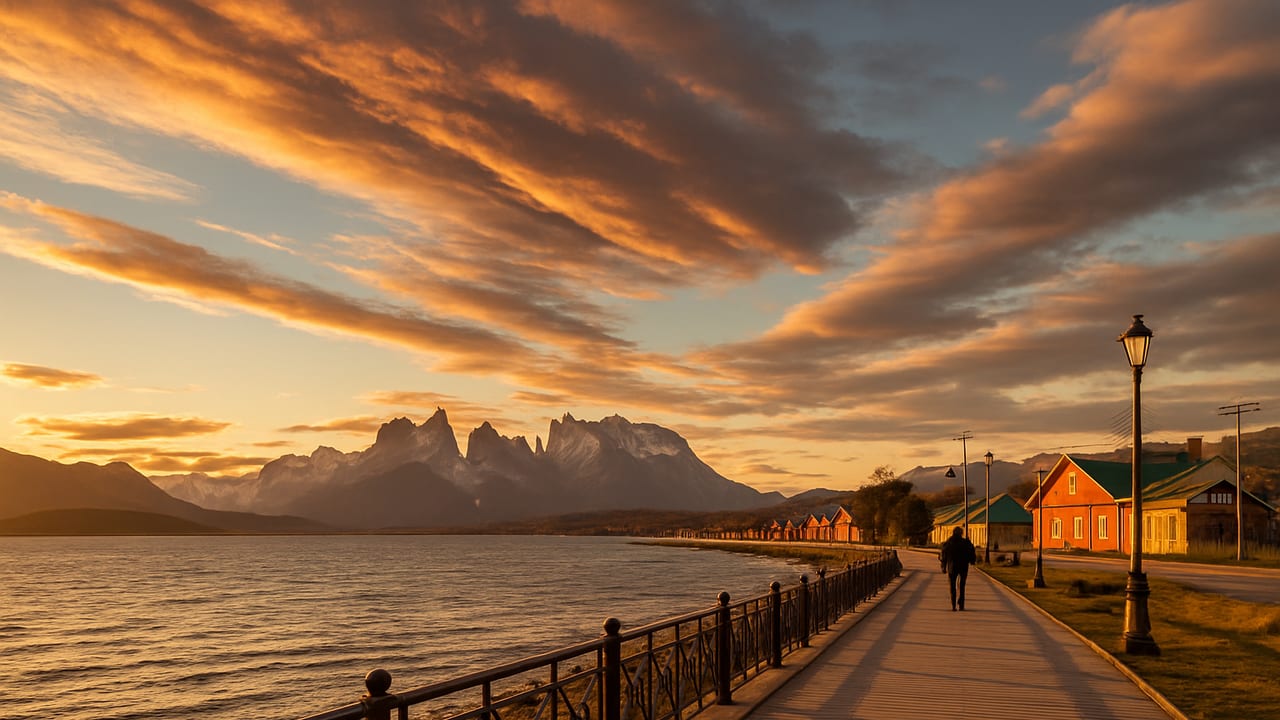
The best time to visit Puerto Natales is January, when daytime highs commonly reach 15-17°C (59-63°F), daylight stretches past 16 hours, and every trail, tour, and glacier cruise is running at full capacity. That’s the peak-condition answer, but it’s not the only useful one: late November and March deliver nearly the same weather for meaningfully less money and far smaller crowds, and even winter has a case for travelers who aren’t there to trek. Which window is actually “best” depends less on the calendar than on what you’re in Puerto Natales to do.
Why the Calendar Isn’t the Whole Answer
Puerto Natales sits at the edge of Chilean Patagonia, and its weather swings harder across a single season than most destinations swing across a year — a 15°C summer afternoon and a below-freezing July morning are both entirely normal here, just five months apart. That range is exactly why a generic “best time to visit” answer undersells the decision: the month that maximizes your odds of clear photos on the Torres del Paine trail isn’t necessarily the month that gets you the best hotel rate, and it’s rarely the month with the fewest other trekkers on the boardwalk.
A Composite Case: Two Trips, Six Weeks Apart
Picture two travelers booking the same week in different years — a composite scenario, not one specific trip, but a common pattern. The first books mid-January because every “best time to visit Patagonia” article told her to. She gets warm, reliably sunny days on the trail, and also a fully booked hostel dorm reserved two months out, a mid-range room running 40% above its shoulder-season rate, and wind strong enough to make the glacier cruise operator reroute her boat’s route twice in one afternoon.
The second traveler, with a more flexible schedule, goes in the second week of November instead. He gets slightly cooler days, closer to 12-13°C, and misses the very longest daylight hours — but he also gets a hostel bed booked four days out instead of two months, a mid-range room at the regular rate, and noticeably calmer conditions on the water.
Neither trip was a mistake. The lesson is that “best” was doing double duty — best weather versus best value — and each traveler picked the one that actually mattered to them.
The Framework: Match the Season to What You’re Actually Doing
Instead of one verdict, it’s more useful to run through four questions and let the answer point to a season.
- Are you trekking the W or O in Torres del Paine? Go in summer (December-February) if trail access and long daylight matter most, or in the shoulder months (October-November, March-April) if you’re comfortable with cooler temperatures in exchange for thinner crowds on the trail itself.
- Are you here mainly for the glacier cruise or the fjords? Shoulder season is arguably the better call — the Balmaceda and Serrano glaciers don’t change much month to month, and calmer water beats a few extra degrees of air temperature for a boat trip.
- Are you budget-conscious? Skip summer’s December-to-February peak, when accommodation prices commonly climb 30-50% above their base rate. Late November and March get you most of the same weather for a fraction of the premium.
- Are you just passing through, without a trek or cruise booked? Almost any month works for the town itself — the waterfront and the Municipal Historical Museum aren’t weather-dependent — but winter (June-August) is genuinely quiet, cold, and short on daylight, which suits some travelers and puts off others.
Season by Season, With Real Numbers
Summer (December-February): Peak Weather, Peak Everything Else
Daytime highs typically run 14-17°C (57-63°F), with overnight lows around 6-8°C (43-46°F) and daylight stretching to 16-17 hours around the solstice in late December. It’s also the windiest stretch of the year — gusts of 60 km/h are routine, and the strongest days push well past 100 km/h, which is worth knowing before you assume “summer” means calm. Chile’s Dirección Meteorológica publishes current station data for the area if you want to check actual conditions closer to your travel dates rather than planning purely off seasonal averages. Every trail, tour operator, hostel, and mid-range hotel is open and, in the busiest weeks, close to full. Book accommodation and Torres del Paine tickets at least a month ahead if you’re set on this window.
Shoulder Season (October-November and March-April): The Value Pick
Daytime highs sit roughly 10-13°C (50-55°F), noticeably cooler than summer but rarely uncomfortable with proper layers. Wind, while still a factor here, tends to be less relentless than the summer’s near-daily gusts. Crowds thin out substantially, prices drop back to their base rate, and most trails and services remain fully open. Spring (October-November) brings wildflowers and building daylight; fall (March-April) brings calmer conditions and color in the surrounding lenga forest as the season winds down. Either half of the shoulder season is a genuinely strong trade of a few degrees for a meaningfully better price and a quieter trail.
Winter (June-August): Quiet, Cold, and Not for Trekking
Daytime highs drop to roughly 2-5°C (36-41°F), with overnight lows commonly below freezing, and daylight shrinks to as little as 7-8 hours in June and July. Some trails and services close for the season, and this isn’t the window to plan a Torres del Paine trek around. It’s a legitimately good time for the town itself, though — hostel prices bottom out, the waterfront and museum are unaffected by snow, and Puerto Natales without a trekking crowd is a different, calmer place. Anyone building a winter itinerary around the park specifically should check current trail and service status before committing, since conditions and closures shift year to year.
What the Weather Actually Changes on the Ground
A few practical effects are worth planning around regardless of which season you land in:
- Boat cruises get weather-dependent, not just scenic. Operators running the Balmaceda and Serrano glacier cruise occasionally shorten, reroute, or reschedule a trip when fjord winds turn severe — more common in the gustier summer weeks than in the calmer shoulder months. Building a spare day into a summer itinerary covers you if a cruise gets rescheduled.
- Park ticketing tightens with the season, not just the calendar. Torres del Paine now runs entry through an online, route-based reservation system rather than gate sales, and popular routes in the December-to-February window can sell out weeks ahead — worth checking the park’s official ticketing page before you fix your dates.
- Layering matters more than any single “right” jacket. A clear Patagonian morning can turn to wind and rain by afternoon in any season, summer included, so packing for four seasons in one day is standard advice here rather than an exaggeration.
Crowds, Light, and What a Camera Actually Sees
Weather data tells you what temperature to pack for, but it doesn’t tell you what the trip will feel like on the ground, and that’s a different question by season.
Summer’s long daylight is a genuine advantage for photography — sunrise arrives before 6 a.m. and sunset lingers past 10 p.m. in late December, which stretches the golden-hour window at both ends of the day well beyond what a shorter-daylight season offers. The trade-off is that you’re rarely alone at the well-known viewpoints; the boardwalk, the park’s main lookouts, and the glacier cruise decks all fill up in the December-to-February stretch, and a few of the more popular refugios along the W trek book out student-dorm-style weeks in advance.
Shoulder season trims the daylight window but thins the crowds considerably — the same viewpoint that had a dozen people angling for the same shot in January might have two or three in early November. Fall adds warm color to the lenga forest that summer’s uniform green doesn’t offer, which is worth factoring in if photography is part of why you’re going.
Winter flips the calculation entirely. Daylight is short enough that a day trip has to be planned around it rather than around interest, but the town itself, largely emptied of trekkers, is a genuinely different place to photograph and experience — fewer crowds than any other season, at the cost of the color and the long light that make the other three seasons more forgiving for casual photos.
Applying It: Picking Your Own Window
Start with the four questions in the framework above, then check them against the season-by-season numbers. A trekker chasing the warmest, longest days with a flexible budget lands in January. A traveler who wants most of that weather without the premium or the crowds does better in late November or March. Someone whose trip centers on the glacier cruise rather than the trail has a real case for shoulder season regardless of budget, since calmer water matters more there than a few extra degrees. And a traveler just passing through without a trek or cruise booked can visit nearly any month, winter included, and get a legitimate, if colder and quieter, version of the town.
The Takeaway
There’s no single best time to visit Puerto Natales — there’s a best time for what you’re actually doing there. January delivers the most reliable warm-weather window for trekking, but it also delivers the highest prices, the fullest trails, and the strongest wind. Late November and March get you most of the same weather for less money and fewer crowds, and winter is a legitimate, if narrower, option for anyone visiting the town without a trek or cruise on the itinerary. Pick the season that matches your actual plan, then book Torres del Paine tickets and accommodation as far ahead as that season’s demand requires.
For more on planning around the rest of the region, our South America destination guides cover the wider area beyond this one town. On the packing side, Patagonia’s wind and temperature swings are exactly the conditions our guides to waterproof hiking shoes and compression socks for cold weather are built around, and our travel tips section covers the broader trip-planning logistics that matter regardless of which season you pick. If you’re comparing where to stay across the season you’ve picked, Expedia’s hotel search for the area is a reasonable way to check current rates before you commit.
Frequently asked questions
- What is the best month to visit Puerto Natales?
- January is the single strongest month for warmth and daylight, but late November and March are close behind on weather while costing less and drawing smaller crowds. There isn't one universally "best" month — it depends on how much you value peak conditions over lower prices and quieter trails.
- Is Puerto Natales windy?
- Yes, especially in summer. Gusts regularly exceed 60 km/h from December through February and can push past 100 km/h on the worst days, which is part of why shoulder-season visitors often report calmer, more comfortable conditions despite the cooler temperatures.
- Is it worth visiting Puerto Natales in winter?
- For the town itself, yes — it's quiet, cheap, and the waterfront isn't affected by snow. For trekking, winter (June through August) is a genuinely different trip, with short daylight, freezing temperatures, and some trails and services closed, so check current conditions before planning a winter Torres del Paine itinerary.
- When should I book Torres del Paine tickets and tours if I'm visiting in peak season?
- A month or more ahead for December through February. Park entry now runs through an online, route-based reservation system rather than gate sales, and glacier cruises and mid-range accommodation both sell out in that window, so booking early matters more here than the shoulder or winter months.
- What's the rainiest time of year in Puerto Natales?
- Late autumn and winter, roughly May through July, see the most rain and the first regular snow. Summer isn't dry exactly, but its precipitation tends to arrive as brief, wind-driven squalls rather than the steadier, colder rain of the off-season.
- Is spring or fall a better time to visit Puerto Natales?
- Both work well and beat summer on crowds and price, but they differ in character. Spring (October-November) brings wildflowers and lengthening days as the season builds toward peak; fall (March-April) offers calmer winds and warm color in the surrounding lenga forests as things wind down. Neither is clearly better — it comes down to whether you'd rather catch the season arriving or fading.