7 Real Hidden Gems in Salento, Colombia Worth the Detour
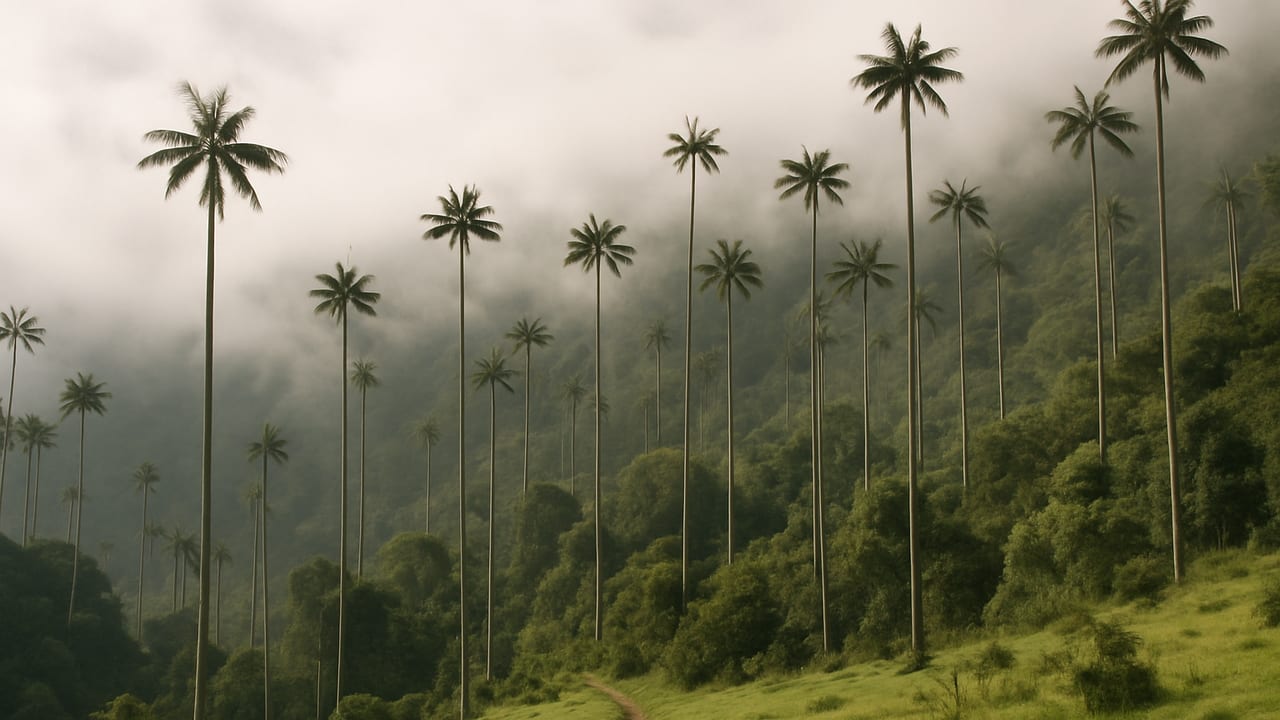
The real hidden gems near Salento are the places most “hidden gems” lists leave out entirely: La Carbonera, a wax palm forest with more palms and far fewer visitors than Cocora Valley; the Santa Rita Nature Reserve’s waterfall and old railroad tunnel; and the quieter cloud-forest walk at Kasaguadua Natural Reserve. What usually gets labeled a “hidden gem” instead — Alto de la Cruz, Calle Real, even Cocora Valley itself — is exactly what every other visitor is already doing, which isn’t hidden by any reasonable definition.
Why Most “Hidden Gems in Salento” Lists Aren’t
Search the phrase and you’ll mostly get the same dozen attractions reshuffled: Cocora Valley, a coffee farm, Alto de la Cruz, Calle Real, maybe a plate of trout. These are genuinely good things to do in Salento. They are not hidden. Cocora Valley alone draws a steady stream of Willy jeeps from the main square starting at 6:30am, and Alto de la Cruz is a twenty-minute climb from the plaza that shows up in nearly every guide to town.
That matters for trip planning because a “hidden gems” list that’s secretly just a highlights list sets the wrong expectation. If you’ve got three or four days in Salento and you’re hoping to spend one of them somewhere quieter than the main circuit, you need to know which spots actually deliver that — not which ones a blog decided to relabel.
A Composite Case: Following the Wrong List
Picture a fairly common version of this mistake: a traveler with four days in Salento reads a “hidden gems” roundup, builds a full day around Alto de la Cruz and a slow wander down Calle Real expecting a quiet, off-the-radar morning, and instead finds both places more crowded than the coffee farm tour they did the day before. That’s a composite scenario, not one specific trip, but it reflects a real gap in how a lot of this content gets written — repackaging the same highlights under a different headline rather than checking whether they’re actually quiet.
The traveler in that scenario still has a fine day. Alto de la Cruz is worth the climb regardless of crowd size, and Calle Real’s cafés are good even when busy. But if a genuinely quiet, less-touristed morning was the actual goal, a different plan — one built around La Carbonera or Santa Rita instead — would have delivered it. The lesson worth remembering before you build an itinerary around a “hidden gems” headline: check whether the list is actually describing something uncrowded, or just something popular with a new label.
The Framework: What Actually Makes Something a Hidden Gem Here
Three questions separate a genuine hidden gem from a relabeled highlight:
- Does it require more effort to reach than the main attractions? La Carbonera needs a 4x4 and a booked tour; Cocora Valley needs a seat on a jeep that leaves every half hour. That gap in effort is most of why one stays quiet and the other doesn’t.
- Would most Salento visitors skip it even if they knew about it? A multi-day trek to Los Nevados filters out everyone without the time or fitness for it, which is exactly why it stays uncrowded regardless of how well-known it becomes.
- Does it still deliver something worth the extra effort? A quiet spot that isn’t actually worth visiting is just an inconvenient one. Every entry below has to clear that bar, not just the “low crowds” one.
The 7 Spots That Actually Clear That Bar
1. La Carbonera — More Wax Palms, a Fraction of the Crowd
La Carbonera is a wax palm forest roughly two to three hours from Salento by unpaved mountain road, reachable only by 4x4 or Jeep Willy — there’s no public transport route in, which is the single biggest reason it stays quiet. Local operators and comparison guides consistently describe it as holding noticeably more wax palms than Cocora Valley, though exact counts vary wildly between sources (estimates run from a few thousand to several hundred thousand, which says more about how rarely anyone’s actually counted them than anything else). What’s consistent across sources is the crowd difference: a few dozen visitors a day at La Carbonera against the thousands who pass through Cocora Valley.
Tours run from Salento or nearby Filandia, typically bundling the 4x4 transport, entry, and sometimes lunch for somewhere between $115-250 USD per person depending on the operator and inclusions — a mountain-biking-only version runs closer to $60. Budget a half to full day once the two-plus hours of travel each way are factored in, and treat this as an addition to Cocora Valley rather than a replacement for it; the two scenes are different enough, and Cocora is still the easier, more iconic version of the same experience.
What you get for the extra time and cost is a wilder, less manicured version of the same wax-palm scenery — the forest here spreads across a wider, less groomed stretch of cloud forest than Cocora’s more curated loop trail, and several operators pair the hike with a downhill mountain-bike return or a stop at a smaller waterfall along the access road. None of that makes Cocora Valley skippable; it just makes La Carbonera worth the extra half-day for anyone who’s already done the famous version and wants the quieter one too.
2. Santa Rita Nature Reserve — A Waterfall, a Tunnel, and Almost Nobody Else
Santa Rita sits on a former coffee farm in Boquía, just outside Salento, that’s been partly returned to high Andean rainforest as a private ecotourism project. The reserve spans roughly 173 hectares, 73 of them protected forest, and the main draw is a 17-meter waterfall with a natural swimming pool at the end of a 1.3 km trail that crosses open cattle pasture, an old disused railroad tunnel, and a small creek.
Entry runs roughly 7,000 COP per person — a fraction of what a bookable tour elsewhere in town costs, since you’re paying a private landowner’s gate fee rather than an agency margin. That fee covers the waterfall and natural pool along with the reserve’s other trails, including a set of caves and a few smaller swimming holes past the main falls that most day visitors don’t bother walking the extra distance to find. It’s walk-in friendly, no tour required, which makes it one of the easiest genuine hidden gems on this list to add to a day that’s otherwise light — a taxi or shared transport to Boquía gets you to the trailhead, and the walk in is calm enough to do solo.
3. Kasaguadua Natural Reserve — The Quiet Second Cloud-Forest Walk
Kasaguadua runs a roughly two-hour guided walk through a private cloud-forest reserve a short trip from town, focused on local reforestation and birdlife rather than a single landmark view. Multiple sources covering Salento’s attractions single it out specifically as the “hidden gem” alternative to the main hikes, and the contrast with Cocora Valley’s crowds is real — this is a slower, quieter version of the same cloud-forest terrain, better suited to a traveler who wants a second forest walk without a second round of jeep traffic and photo lines.
4. Filandia’s Chocolate Tour and Second Mirador
Filandia itself isn’t a secret anymore — it’s a standard day trip from Salento at this point, with its own steady trickle of visitors. What’s still genuinely quiet within Filandia is Finca El Porfín’s small-batch chocolate tour, which walks through roasting and tasting at a much lower-key pace than the town’s main coffee-tour circuit, and a second mirador past the main viewpoint tower that most day-trippers never walk the extra few minutes to reach.
Both are easy add-ons to an existing Filandia trip rather than reasons to make a separate one, and both see a fraction of the foot traffic the main mirador tower and Calle Real’s equivalent in Filandia get.
5. The Montiel Viewpoint, By Backroad Jeep
Rather than the standard jeep run straight to Cocora Valley, some local operators run a backroad Willy route out toward a viewpoint near Montiel, passing through working coffee farms and steep dirt tracks most visitors never see from the road. It’s a different angle on the same coffee-country scenery that shows up in every Salento photo, reached by a route that isn’t part of the standard tourist circuit simply because it takes longer and isn’t the most direct way anywhere.
This one works best as an add-on rather than a destination in its own right — ask at one of the smaller tour desks in town (not the main kiosk at Plaza de Bolívar, which mostly sells the standard Cocora Valley run) about a backroad or farm-route jeep tour, and expect an extra hour or two over the direct trip. The payoff is a version of the valley views without another jeep queued up behind yours at every stop.
6. Tejo, Away From the Main Strip
Tejo — Colombia’s traditional game of throwing metal discs at small gunpowder charges set into a clay target — is listed in almost every Salento guide at this point, usually pointing to the same one or two bars on the main strip near the plaza. The game itself isn’t a secret, but playing it at a smaller, local spot a few blocks off Calle Real, rather than the venue every tour group gets steered toward, is a genuinely different and quieter version of an activity that’s otherwise become a standard stop.
Expect the basics to be similar wherever you play: a lane of packed clay, a scoring target rigged with small gunpowder charges that pop audibly on a direct hit, and beer sold by the case rather than the bottle, since the game is built around sharing a table over a few rounds rather than playing once and leaving. Asking a hostel host or a local shop owner for a spot “donde van los locales” (where the locals go) usually turns up something quieter than whatever a tour guide would default to.
7. Los Nevados and the Paramillo del Quindío Trek
For travelers with the time and fitness for it, a multi-day trek toward Los Nevados National Park’s volcanoes — commonly built around summiting Paramillo del Quindío — passes through páramo high-altitude ecosystems most Salento visitors never see, since Cocora Valley only touches the edge of the park’s buffer zone. This filters itself: the altitude, multi-day commitment, and need for a knowledgeable guide (conditions shift with volcanic activity) keep it quiet regardless of how often it gets mentioned, which is exactly the kind of self-limiting access that keeps a spot genuinely uncrowded.
The route typically covers roughly 20 km a day over two to three days, climbing well above 4,500 meters at points, with overnight stays in basic mountain farmhouses rather than anything resembling a hotel. That’s a real undertaking, not a casual add-on, and it’s worth treating altitude seriously regardless of how fit you are — a day or two resting in Salento’s own 1,895-meter elevation beforehand is a reasonable way to acclimatize before pushing higher. It’s the one entry on this list that isn’t really a Salento day trip at all, more a reason to extend a stay in the region by several days.
Fitting These Into a Longer Stay
None of these seven work well as a replacement for a first day in Salento — they’re additions for a stay of four days or more, once the main circuit is already covered. A reasonable way to lay out an extra two days on top of the standard Cocora Valley and coffee-farm itinerary looks something like this: one day for La Carbonera, since the travel time alone makes it a dedicated outing rather than something to squeeze alongside anything else, and a second day combining Santa Rita’s waterfall in the morning (it’s close enough to Salento to do before lunch) with Kasaguadua’s cloud-forest walk in the afternoon, since both run two hours or less and sit a short trip from town in roughly the same direction.
Filandia’s chocolate tour and second mirador slot naturally into whatever day already includes a Filandia trip, rather than needing their own slot. The Los Nevados trek is the exception — it needs its own multi-day block near the start or end of a longer Colombia trip, not squeezed between other Salento activities, since altitude acclimatization and guide logistics don’t compress well.
What to Skip If Quiet Is the Actual Goal
If the point of a day is specifically to get away from Salento’s main circuit, Alto de la Cruz, Calle Real, and Cocora Valley itself don’t deliver that — they’re worth doing, but on a different day, with different expectations. None of the seven spots above ask you to skip them; they’re what to add once you’ve already done the highlights and still have time left over.
The Takeaway
A genuine hidden gem near Salento has to clear a real bar: harder to reach than the main attractions, and still worth the extra effort once you get there. La Carbonera and Santa Rita clear it easily, with noticeably fewer visitors than Cocora Valley for a similar or complementary payoff. Kasaguadua and Filandia’s chocolate tour clear it on a smaller scale, as quieter add-ons rather than full-day commitments. Treat all of them as a second layer to add once you’ve covered the main circuit, not a replacement for it — the popular stuff in Salento is popular for a reason.
If you’re still deciding how many days this deserves in the first place, our guide on whether Salento is worth visiting covers the town’s main draws, and our day trips from Salento guide covers the logistics for Filandia, Santa Rosa de Cabal, and the rest of the standard circuit these gems sit alongside. Traveling alone changes a few of the planning details here, which our guide for solo travelers covers. For the muddy, river-crossing trail into Santa Rita or a long day on La Carbonera’s dirt roads, our guide to waterproof hiking shoes covers footwear that holds up better than what most people pack for a “coffee country” trip. For the flights in and out through Armenia or Pereira, our guide to TSA-approved toiletry bags covers the one packing detail that trips up travelers at security most. For current entry requirements and safety guidance covering the rest of your Colombia route, the U.S. State Department’s Colombia travel page and background on the UNESCO-listed Coffee Cultural Landscape these spots all sit inside are both worth a read before you go.
Frequently asked questions
- What is the biggest hidden gem near Salento?
- La Carbonera, a wax palm forest roughly two to three hours from town by 4x4. It holds visibly more wax palms than Cocora Valley and draws only a few dozen visitors a day instead of the thousands Cocora sees, simply because there's no public transport in and a tour or private vehicle is required to get there.
- Is La Carbonera worth visiting instead of Cocora Valley?
- Worth visiting in addition to, not instead of. Cocora Valley is the easier, cheaper, more iconic hike, and skipping it to save time for La Carbonera would mean missing the view most people come to Salento for. La Carbonera earns its own half-day if you have three or more days and want the same wax-palm scenery with almost nobody else around.
- How do you get to La Carbonera from Salento?
- By 4x4 or Jeep Willy, booked through a local tour operator in Salento — there's no public bus or shared jeep route, and the unpaved mountain road genuinely needs a capable vehicle. Figure on a half-day to full-day outing once travel time both ways is included.
- Is Kasaguadua Natural Reserve worth visiting?
- Yes, especially as a second cloud-forest walk after Cocora Valley. It's shorter, less crowded, and focused on conservation and birdlife rather than a single photo-op landmark, which makes it a good half-day for a traveler who's already seen the wax palms and wants a quieter version of the same landscape.
- How much does the Santa Rita Waterfall cost to visit?
- Roughly 7,000 COP per person for entry to the Santa Rita Nature Reserve, which includes the waterfall, a natural pool, and an old railroad tunnel along the trail. That's a small fraction of what most bookable tours around Salento charge, since you're paying a private landowner's gate fee rather than an agency.
- Is Filandia still a hidden gem, or has it gotten touristy too?
- Filandia itself is well known at this point and gets its own steady flow of day-trippers, so it's not a secret. What's still genuinely quiet is Finca El Porfín's chocolate tour and the second mirador past the main viewpoint tower, both of which see a fraction of Filandia's own foot traffic.
- What's the best time of year to visit Salento's lesser-known spots?
- The same dry-season windows that work for Cocora Valley — December through February, and July through August — since the unpaved roads to La Carbonera and the trail to Santa Rita both get harder going in the wetter months. None of these spots close in the rainy season, but mud and river crossings are a bigger factor than on Salento's main trails.
- Do you need a guide for these hidden gems?
- For La Carbonera, yes in practice — the access road requires a 4x4 and local operators handle that as part of the tour. Santa Rita, Kasaguadua, and Filandia's chocolate tour are all walk-in or self-guided friendly, with entry fees paid on arrival rather than a pre-booked tour.