Salento for Solo Travelers: What Actually Changes Alone
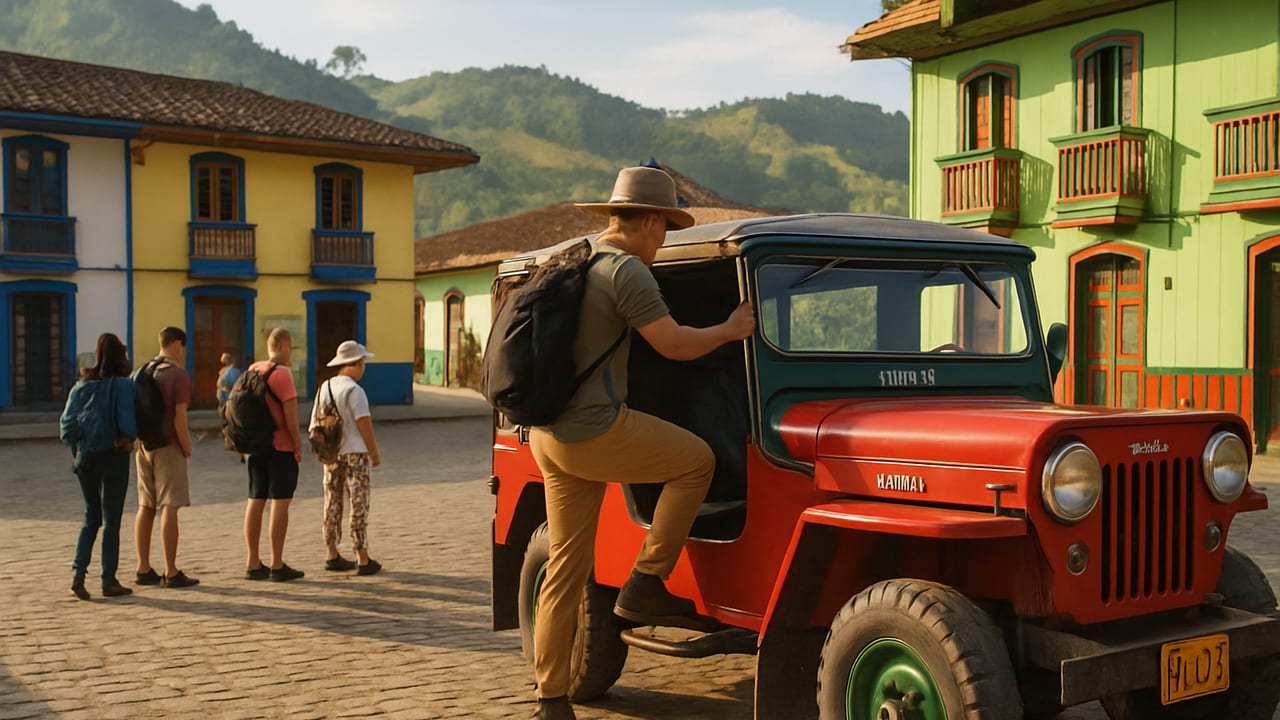
Yes, Salento works well for solo travelers, and the usual worry about traveling alone — paying more because there’s no one to split costs with — mostly doesn’t apply here. The jeeps out to Cocora Valley are shared colectivos that charge per seat, not per vehicle, so a solo traveler pays the same fare as everyone else crammed in alongside them. The genuine complication is smaller and easier to miss: those jeeps depart when full and stop running for the night on a fixed schedule, and alone, there’s no one else keeping an eye on the clock while you’re still deep in the Cocora Valley loop.
Why the Safety Question Isn’t the Real Issue Here
Search “Salento solo travel” and most of what comes back is reassurance about safety, which makes sense as the first worry for anyone traveling alone in an unfamiliar country. The reassurance holds up: crowd-sourced safety trackers for solo female travelers rate the town around 3.7 out of 5, describing it as generally safe with friendly, welcoming locals and crime levels low relative to the rest of Colombia. Salento isn’t flagged in the country’s current areas of concern, and the town’s small size and heavy foot traffic from other travelers make it one of the more relaxed places in Colombia to walk around alone.
That’s worth knowing, but it’s not the part of a solo Salento trip that actually trips people up. The bigger gap in most general “is Salento safe” content is that it stops there, without getting into what changes logistically once there’s no travel companion to help track a bus time, split a private ride, or notice you’re running late for the last jeep back from a hike that takes most of a day by itself.
A Composite Case: Cutting the Last Jeep Close
Picture a fairly common scenario: a solo traveler buys a jeep ticket at the kiosk in Plaza de Bolívar in the late morning, rides out to Cocora Valley, and takes the full loop out to the Acaime hummingbird reserve and back — a hike that runs 5-6 hours for most people covering the roughly 11-12 km round trip. That’s a composite situation, not one specific trip, but it reflects how a lot of solo Cocora Valley days actually unfold, since there’s rarely anyone else along to say “we should probably start heading back now.”
In a group, someone usually notices the time. Alone, it’s easy to stay for one more viewpoint or one more coffee at the reserve’s small café, and the jeeps back to Salento run on a schedule that doesn’t wait for stragglers — the last one typically leaves Cocora Valley in the early evening, though the exact time varies by source and season, so it’s worth confirming with your outbound driver rather than assuming. Miss it, and the options narrow to a costly private ride or an unplanned wait.
That’s the pattern worth naming before you set out alone: Cocora Valley itself is an easy, low-stress hike to do solo, but it’s also a destination with a hard cutoff for getting back, and having no one else along to flag the time is the one thing that actually changes.
What Actually Changes When You’re Alone in Salento
Four things shift without a travel companion to split logistics, cost, or company:
- The jeep schedule needs watching, not the fare. Because willys charge per seat, solo travel doesn’t cost more here the way it does in destinations where the only transport option is a private taxi split by group size. What it does require is tracking the return schedule yourself, since there’s no one else to notice you’re cutting it close.
- Cash backup matters more. ATMs in Salento have a reputation for being unreliable, sometimes running low on cash or going offline for stretches. That’s an inconvenience with a companion who might have spare cash; alone, it’s worth arriving with more cash on hand than you think you’ll need, drawn from a working ATM in Armenia or Pereira before you head into town.
- Meeting people takes one small deliberate step. Salento’s backpacker scene is real but concentrated in a handful of social hostels rather than spread evenly across every place to stay, so which hostel you pick matters more solo than it would on a trip where you already have company.
- Working remotely is a gamble worth testing early. If part of the trip involves logging on for work, Salento’s Wi-Fi has a mixed reputation — fine for a few hours at the right café, less reliable for anything that needs a stable connection all day.
Where to Base Yourself for a Solo Trip
A social hostel near the plaza is the default choice for a reason beyond price. Viajero Salento and Coffee Tree Boutique Hostel both come up repeatedly as the two most popular options for solo travelers looking to meet people, with shared kitchens, common areas, and — at Viajero — a reputation across Colombia for pulling in a steady stream of backpackers. The Plantation House and La Serrana Eco Farm Hostel are two more social options slightly outside the immediate center, trading a few minutes’ walk for quieter grounds and, at La Serrana, farm-stay views over the surrounding hills. A private guesthouse room is a reasonable choice for a rest night after the Cocora Valley hike, but it removes you from that built-in social layer on the nights you’re more likely to want it.
Getting to Cocora Valley and Back Without Missing the Last Jeep
This is the detail that separates a smooth solo day from a stressful one. Willys leave from Plaza de Bolívar starting around 6:30am, charging roughly a few thousand Colombian pesos each way — cheap enough in dollar terms that the fare itself is a non-issue, though it’s worth checking the current price at the kiosk since it shifts with fuel costs and season. Drivers wait until the jeep fills before leaving, which usually takes only a few minutes given how steady the traffic to Cocora Valley is, but it does mean there’s no fixed departure time to plan tightly around.
The return trip is the part worth building slack into. Jeeps run until early evening, and the exact time of the last one has been reported differently across sources — somewhere in the 5:30-6:30pm range — which is reason enough to ask your outbound driver or the kiosk directly for that day’s actual schedule rather than relying on a number from an old blog post. Building in a 30-minute buffer before whatever time you’re told, and starting the hike back from the far end of the loop earlier than feels strictly necessary, is the simplest way to avoid the choice between an expensive private ride and an unplanned night stranded at the valley entrance.
Working Remotely From Salento, If That’s Part of the Trip
For anyone treating this as a working stop rather than a pure vacation, a few cafés near the plaza have a reputation as the more reliable Wi-Fi spots — Café Jesus Martín and Café Quindío both turn up consistently in roundups of where to work from in town, with free Wi-Fi and enough outlets to hold a laptop through a working session. That said, connectivity across Salento as a whole has a mixed reputation, and heavy afternoon rain — common most of the year at this altitude — has been known to slow things down further. Test it on your first morning before committing several days of scheduled calls to it; the coffee, at least, is reliably good.
Meeting Other Travelers
Three things do most of the work here: staying at one of the social hostels above, riding the bus in from Armenia or Pereira rather than a private transfer, and booking a coffee farm tour or Cocora Valley group hike instead of going alone every time. All three put you in a small group of people doing roughly the same thing you are, which tends to produce conversation without requiring much effort beyond showing up.
When to Go Alone
The dry seasons — December through March, and July through August — offer the most reliable hiking weather and the clearest views from Cocora Valley’s open ridgeline. Salento sits at roughly 1,895 meters (6,200 feet), so mornings run cool even outside the rainier months, and rain is possible year-round regardless of season. That matters slightly more solo, since a quiet hostel common room during a rained-out afternoon is still a fine place to wait it out, while a full plaza during peak weekends and Colombian holidays can feel like more competition for a hostel bed than it’s worth booking last-minute.
The Takeaway
Salento is a genuinely easy, low-cost place to travel alone — the safety question that dominates most searches about it is close to a non-issue, and the shared-jeep system means solo travel doesn’t carry the usual transport-cost penalty. What actually changes alone is smaller and easier to overlook: track the last jeep back from Cocora Valley yourself rather than assuming someone else will notice the time, carry more cash than usual since ATMs aren’t fully reliable, and pick a social hostel on purpose if meeting people is part of the plan. Test the Wi-Fi early if any work is riding on it, and build a buffer into the hike back rather than cutting it to the scheduled minute.
If you’re still deciding whether Salento deserves a spot on your itinerary at all, our guide on whether Salento is worth visiting covers the town’s draws in more depth. For the muddy, cool-morning trail out to Cocora Valley, our guides to waterproof hiking shoes and compression socks for cold weather both cover gear that matters more here than the “coffee country” label suggests. For the flights in and out through Armenia or Pereira, our guide to TSA-approved toiletry bags covers the packing detail that trips up travelers at security most. And if you’re weighing other solo-friendly bases for a longer South America trip, our guide to Puerto Natales for solo travelers covers a very different, colder end of the continent. For a broader safety picture before you go, Travel Ladies’ Salento safety page collects recent solo traveler reports, and the U.S. State Department’s Colombia travel page is a reasonable starting point for current advisories covering the rest of your route.
Frequently asked questions
- Is Salento safe for solo female travelers?
- Yes, by most accounts — crowd-sourced safety trackers rate it around 3.7 out of 5, with local reports describing it as generally safe with friendly, welcoming locals and relatively low crime compared to other parts of Colombia. Standard precautions still apply after dark, and the town's small size means most of it is walkable well into the evening without much foot traffic thinning out around you.
- How do you meet other travelers in Salento?
- Mostly through hostels — Salento's backpacker scene concentrates in a handful of social properties with shared kitchens and common areas that do most of the introduction work. Buses in from Armenia or Pereira and booked group tours to Cocora Valley or a coffee farm are the two other reliable ways, since both put you with the same small group of people for a few hours.
- How many days should a solo traveler spend in Salento?
- Three nights and two full days covers the Cocora Valley hike and a coffee farm tour without rushing either one. Two nights works if you're tight on schedule, but it usually means picking one or the other rather than doing both at a comfortable pace, which matters more solo since there's no one else pushing you to keep moving.
- Is Salento expensive for solo travelers?
- No, and traveling alone doesn't change that much here. A hostel dorm bed runs $10-20 USD a night regardless of group size, and the shared jeeps to Cocora Valley charge per seat rather than per vehicle, so a solo traveler pays the same few thousand pesos everyone else on board pays. That's a real difference from destinations where the only transport option is a private taxi split by however many people are traveling.
- Do you need to speak Spanish to get around Salento alone?
- It helps but isn't required. English is common at hostels, the more established restaurants around the plaza, and tour operators used to foreign visitors. Jeep drivers, small shops, and the ticket kiosk in Plaza de Bolívar are more likely to be Spanish-only, so a translation app and a few basic numbers cover most of what a solo traveler actually needs to handle alone.
- Can you do the Cocora Valley hike solo, without a group tour?
- Yes — it's one of the easier major hikes in Colombia to do independently. Buy a jeep ticket at the kiosk in Plaza de Bolívar, ride out with whoever else fills that departure, and follow the marked loop trail on your own pace. The only real reason to book a guided version instead is wanting company for the day or a guide's commentary on the wax palms and cloud forest, not any technical difficulty in the trail itself.
- Is Salento good for digital nomads working remotely?
- Mixed, and worth checking before committing several days to working from here. A handful of cafés near the plaza — Café Jesus Martín and Café Quindío among them — offer free Wi-Fi and outlets, but connectivity across the town has a reputation for being inconsistent, especially during heavy rain. It's fine for email and light browsing; anything that needs a stable connection for hours is a gamble worth testing on your first day rather than assuming will work.