Best Time to Visit Nusa Penida: A Season-by-Season Guide
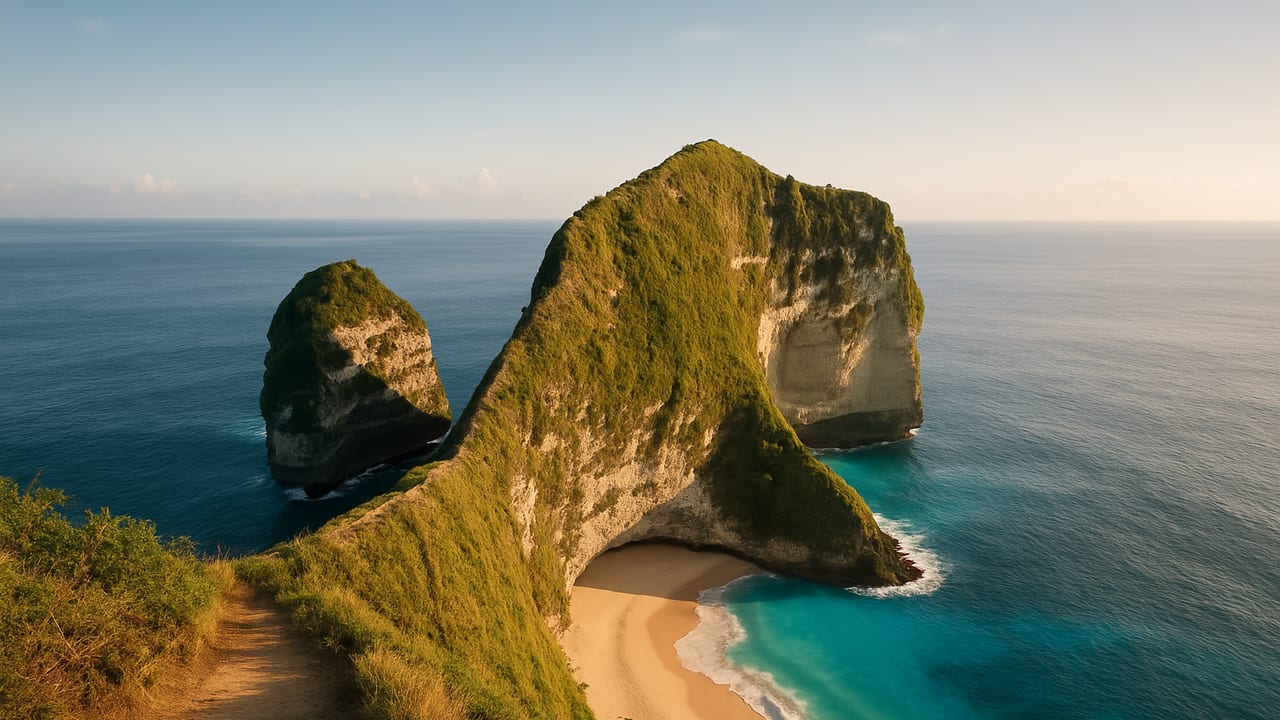
The best time to visit Nusa Penida is the dry season, roughly April through October, with May, June, and September as the sharpest sweet spot — dry-season weather without the July-August crowd surge. That’s the honest short answer. The fuller one depends on what you’re actually going for: a diver chasing mola mola season, a photographer who wants Kelingking Beach without fifty other people in the frame, or a budget traveler who’d rather trade a little rain for a lot fewer costs. None of those travelers should plan around the same window, even though most guides hand out one blanket answer and stop there.
Why “Dry Season” Isn’t a Complete Answer
Telling a traveler to “go in the dry season” is true and not especially useful on its own. April through October covers seven months, and Nusa Penida behaves differently at nearly every point inside that range. July and August are dry, but they’re also when the island is at its most crowded and its accommodation at its most expensive. April and October sit right at the edges of the dry season proper — the general pattern holds rainy season roughly November through March and dry season roughly April through October, but the transition months carry more rain risk than the reliable middle stretch. The rainy season gets dismissed outright by most guides, but plenty of travelers who go in November or December come back with cheaper trips and photos of an empty Kelingking viewpoint that a July visitor will never get.
The real planning question isn’t “dry or wet.” It’s which of the dry season’s very different months — or which rainy-season trade-off — actually matches what you want from the trip.
A Composite Case: The Trip Booked Around a Flight Sale
Picture a couple booking a Bali trip mostly because they found a good flight deal for late February. This is a composite scenario, not one specific trip, but it’s a common way travelers actually end up on Nusa Penida at a given time of year — the flight decided the dates, not the destination’s calendar. They land into the tail end of the rainy season, and their one planned Nusa Penida day gets cut short: a morning downpour turns the unpaved stairs down to Kelingking’s beach level slick enough that their driver flatly recommends skipping the descent, and choppier seas push their return boat back by two hours, eating into a dinner reservation on the mainland.
Contrast that with a similar couple who shifted the same trip to early June, keeping everything else about the itinerary identical. Clear skies at Kelingking, a boat crossing calm enough that neither of them thought about it twice, and enough spare time in the day to add a short snorkel stop at Crystal Bay that the rushed February version never had room for. Same island, same budget range, a noticeably different trip — almost entirely because of five months’ difference in when they went, not anything they did differently once they arrived.
The Pattern Worth Remembering
Nusa Penida’s dry season isn’t a guarantee, and its rainy season isn’t a write-off. What actually separates a good trip from a frustrating one is matching the month to the specific thing you came for — reliable stairs and calm water, thinner crowds, or a particular fish showing up at a particular dive site — rather than picking dates around a flight price and hoping the island cooperates.
A Season-by-Season Framework
Four windows cover most of what changes across the year:
- Peak dry season (July-August). The most reliable weather of the year, and the most crowded and expensive. Viewpoints fill up by mid-morning, boats and drivers need booking a few days ahead rather than the same day, and accommodation prices climb accordingly. Best for travelers who prioritize dependable sunshine over elbow room.
- Shoulder dry season (May, June, September, and — with slightly more rain risk — April and October). The sweet spot for most travelers: dry-season conditions without peak-season crowds or pricing. September carries the added draw of mola mola season nearing its peak at Crystal Bay.
- Rainy season (November-March). Fewer people, lower prices, and a real chance of a washed-out afternoon. Workable for budget-focused and flexible travelers who build a buffer day into the plan rather than a single tight itinerary; riskier for anyone who only has one shot at the island’s cliffside viewpoints.
- Diving and snorkeling season, layered on top of the above. Reef manta rays show up at Manta Point close to year-round — researchers tracking the population, including work summarized by the Marine Megafauna Foundation, have identified the surrounding waters as a likely manta nursery site — so that sighting doesn’t really drive the calendar. Mola mola are the seasonal draw — roughly July through November, peaking in August and September, concentrated at Crystal Bay rather than spread across the island’s dive sites.
Nusa Penida, Month by Month
A quick-reference version of the same framework:
| Month | Conditions | Crowd level | Worth knowing |
|---|---|---|---|
| January | Rainy season | Low | Cheapest month for tours and rooms; expect at least a few washed-out plans |
| February | Rainy season | Low | Similar to January; build a buffer day into any itinerary |
| March | Rainy season, tapering | Low, with one exception | Mainland Nyepi closes the airport and Sanur Harbor for 24 hours — see below |
| April | Dry season begins | Moderate | Shoulder month; some lingering rain risk early in the month |
| May | Dry season | Moderate | One of the two best all-around months |
| June | Dry season | Moderate-high | The other best all-around month, before peak pricing kicks in |
| July | Dry season, peak | High | Reliable weather, but book boats and drivers a few days ahead |
| August | Dry season, peak | High | Same as July, plus the start of mola mola season’s best window |
| September | Dry season | Moderate | Mola mola season peaks at Crystal Bay; excellent weather-to-crowd ratio |
| October | Dry season ends | Moderate | Shoulder month; last reliable stretch before the rains return |
| November | Rainy season begins | Low-moderate | Mola mola sightings can still continue into this month |
| December | Rainy season | Low, except holidays | Late December sees a domestic and international holiday crowd spike despite the rain |
Nyepi Laut, the island-specific boat-and-swimming shutdown covered further down, doesn’t have a fixed month — it follows a full moon on the Balinese calendar and can land in almost any row of this table.
Applying It: Matching the Month to the Trip
The framework above only matters if it changes what you actually book. A few common cases:
- First-time visitors on a single Bali trip. Lean toward May, June, or September. Reliable weather, without paying peak-season prices for a driver or missing a boat slot because everything nearby was already booked.
- Divers timing a mola mola trip. Book August or September specifically, and base near Crystal Bay rather than treating it as one stop on a bigger loop — sightings aren’t a sure thing any month, but the odds are meaningfully better in that window than in, say, April.
- Budget travelers with flexible dates. The rainy season genuinely saves money on tours, drivers, and rooms. Plan a buffer day rather than a single day trip, since a cancelled morning at the viewpoints has somewhere to go instead of just disappearing from the itinerary.
- Photographers chasing an empty Kelingking shot. Time of day matters here as much as time of year — see below — but pairing an early shoulder-month morning with a weekday, rather than a weekend when domestic Bali visitors add to the crowd, is the closest thing to a reliable formula.
The Time-of-Day Detail Most Season Guides Skip
Picking the right month solves maybe half the crowd problem. The other half is what time of day you show up, and it holds regardless of season. Fast boats from Sanur run roughly every hour from about 6:30am to 5pm, and the day-trip tours that dominate Kelingking’s viewpoint mostly land on the island between 8:30 and 9:30am, after riding one of the first few boats over. Arrive at Kelingking before that window — meaning a 7am or 7:30am boat — and the viewpoint is a fraction as crowded as it will be by 10am, dry season or not. The other quiet stretch is late afternoon, roughly after 3:30pm, once most organized tours are already heading back toward the last return boats. A rainy-season November morning can still be crowded if you arrive at 11am; a peak-August dawn can still be quiet if you’re one of the first boats over. Season sets the odds; arrival time decides the actual crowd you get.
If a dive or snorkel stop is part of the plan either way, our guide to dry bags for scuba diving covers sizing one for a crossing that regularly kicks up spray, whatever month you’re crossing in.
The Two Shutdown Days Most Guides Don’t Mention
Nearly every “best time to visit” guide for Nusa Penida covers weather, crowds, and diving conditions. Almost none mention that the island can become entirely unreachable, or entirely off-limits to boats and swimming, on two separate days a year — and neither date follows the regular Gregorian calendar, so it’s easy to land on one by accident.
The first is Bali-wide: Nyepi, the Balinese Day of Silence, falls in March on a date set by the Balinese Saka calendar rather than a fixed day. For 24 hours, Bali’s international airport and Sanur Harbor both close, which means no flights in or out and no boats to Nusa Penida, regardless of how good the weather looks that day.
The second is specific to the islands themselves. Nusa Penida, Nusa Lembongan, and Nusa Ceningan observe Nyepi Laut, or “Silent Sea Day,” a ceremony honoring the sea god Baruna that’s unrelated to mainland Nyepi and timed instead to the fourth full moon of the Balinese calendar, rotating annually between two temples. For a full 24 hours, all marine activity around the islands stops — fishing, diving, snorkeling, swimming, and every boat crossing to or from Bali. A traveler who’s checked the weather forecast and the mola mola calendar can still show up on the one day nothing on or around the island moves. Neither date is published on a standard calendar app, so it’s worth a direct question to your accommodation or dive operator before finalizing a Nusa Penida trip, particularly if you’re planning a tight one- or two-day window with no buffer.
What Doesn’t Change Across Seasons
A few things stay constant no matter when you go, and it’s worth planning around them regardless of month. Cliff edges at Kelingking, Broken Beach, and Diamond Beach are largely unfenced year-round, which makes footwear with real grip worth having whether the stairs are dry-season dusty or rainy-season slick — our guide to waterproof hiking shoes covers the kind of tread that actually holds on Kelingking’s steep, unpaved descent. Ride-hailing apps don’t operate on the island in any season, so arranging a driver or scooter the day before, rather than expecting to hail one on the spot, matters in July as much as it does in December. And the crossing from Sanur is always at least somewhat weather-dependent — check the forecast and your operator’s cancellation policy before booking a tight connecting flight the same evening, whatever month it is.
The Takeaway
There’s a real, single-sentence answer to when to visit Nusa Penida — May, June, or September, for the best balance of dry-season weather and manageable crowds — but the more useful habit is matching the month to what you actually want: peak conditions and don’t mind the crowds, cheaper and quieter with some weather risk, or a specific dive season worth building the whole trip around. Whichever window you pick, an early boat beats a good month for avoiding crowds, and it’s worth a quick check with your accommodation for Nyepi and Nyepi Laut dates before you lock in flights.
If matching a trip to weather and crowds instead of just picking dates off a flight sale appeals to you elsewhere, our guide to the best time to visit Puerto Natales covers the same kind of seasonal trade-off on the other side of the world. For more of the region, our Southeast Asia destination guides round out the rest of the islands and cities worth planning a trip around.
Frequently asked questions
- What is the best month to visit Nusa Penida?
- May, June, and September give the best balance: dry-season weather without July and August's peak crowds or prices. April and October work too, though rain becomes more likely at either edge of the dry season. If crowds matter less to you than reliably dry weather, any month from April through October is a safe bet.
- Is it worth visiting Nusa Penida in the rainy season?
- For budget-conscious and crowd-averse travelers, often yes — tour prices drop, viewpoints empty out, and accommodation gets easier to book last-minute. The trade-off is real: sudden downpours make the steep stairs at Kelingking and Broken Beach genuinely hazardous, and rougher seas occasionally delay or cancel the ferry from Sanur outright, so build slack into a rainy-season itinerary rather than a tight one-day plan.
- When is manta ray and mola mola season at Nusa Penida?
- Reef manta rays are seen at Manta Point more or less year-round, so there's no real off-season for that sighting. Mola mola (oceanic sunfish) are seasonal: they surface from deeper water roughly July through November, peaking in August and September, and sightings concentrate at Crystal Bay rather than spreading evenly across the island's dive sites.
- What's the best time of day to visit Kelingking Beach?
- Before 9am, ahead of the day-trip boats that land mid-morning. The light is softer for photos and the viewpoint hasn't filled up yet. Late afternoon, roughly after 3:30pm, is the other quiet window, once most organized tours have already started heading back toward the last boats to Sanur.
- Is Nusa Penida busy in July and August?
- Yes — it's peak season for both international travelers and Australian and European school holidays, and it overlaps with the dry season's best weather, so demand stacks on top of good conditions. Boats, drivers, and accommodation are all bookable, but book them a few days ahead rather than assuming you can arrange everything the morning of.
- Does Nyepi affect a Nusa Penida trip?
- Two separate observances can, and it's worth checking both before booking. Mainland Bali's Nyepi (Day of Silence), which falls in March, closes the island's airport and Sanur Harbor for 24 hours. Separately, Nusa Penida and its sister islands observe Nyepi Laut ("Silent Sea Day"), timed to a full moon on the Balinese calendar and unrelated to March Nyepi, during which all boats, diving, and swimming stop island-wide for a full day. Neither is predictable from the Gregorian calendar alone, so confirm the dates with your accommodation before locking in travel plans.
- Is the boat crossing to Nusa Penida rougher at certain times of year?
- Yes. The Badung Strait between Sanur and Nusa Penida is generally calmest during the dry season and roughest during the rainy season's storms and the monsoon transition months on either side of it. Even within a calm month, an early-morning crossing tends to be smoother than a mid-afternoon one, when onshore winds pick up.