Nusa Penida for Solo Travelers: Is It Worth Doing Alone?
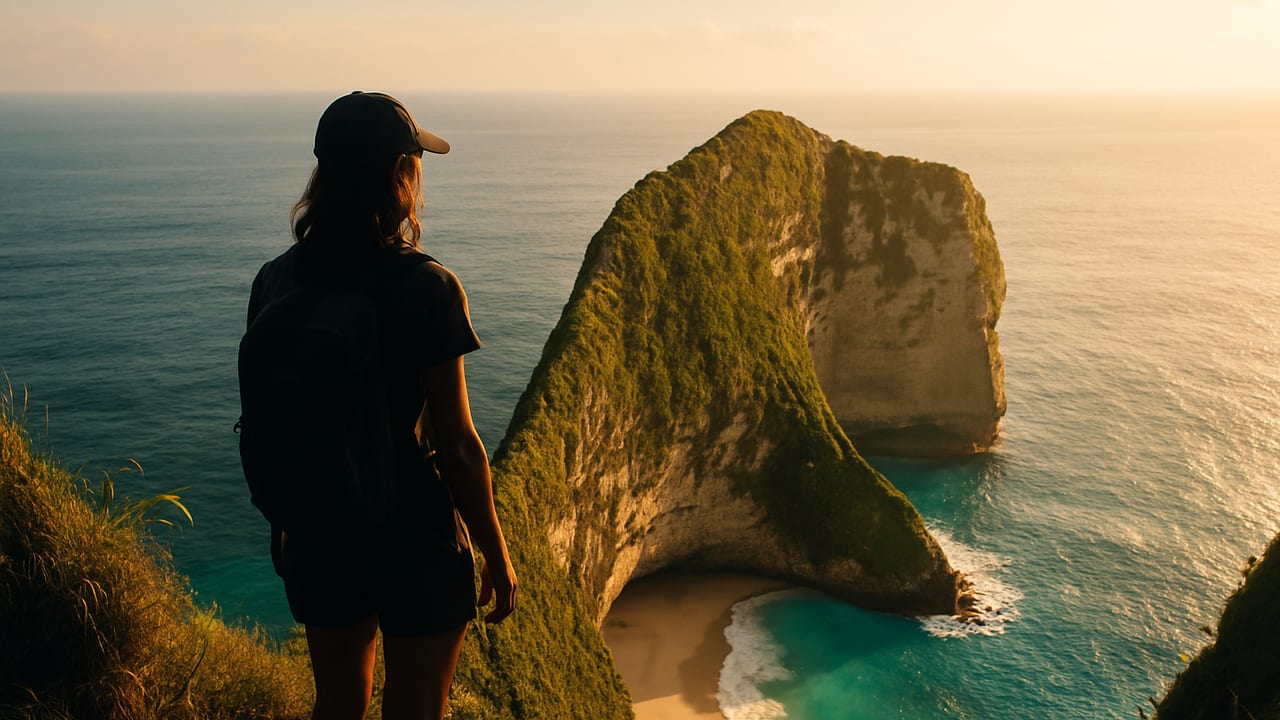
Yes, Nusa Penida is a good solo destination — but it rewards travelers who make two deliberate choices early: how you’ll get around, and where you’ll sleep. Get those right and the island’s cliffs, beaches, and dive sites are as striking alone as with company. Get them wrong, and the same trip becomes either riskier than it needs to be or quietly isolating. Neither problem is really about the island. Both come down to planning decisions a solo traveler has to make that a group would have made for them without thinking about it.
Why Solo Travelers Ask This Question in the First Place
Most Nusa Penida content is written for groups or couples already splitting a driver’s fee three or four ways and keeping each other company at dinner. A solo traveler faces a slightly different island: the same rough roads, but no one to take a turn behind the wheel; the same long day between viewpoints, but no one to talk to on the ferry back. None of that makes the island a bad solo pick. It does mean the standard “just show up and figure it out” advice works less well alone than it does for a group of four.
A Composite Case: The Solo Trip That Almost Wasn’t
Picture a solo traveler landing in Bali with three spare days and a loose plan to “see Nusa Penida.” This is a composite scenario, not one specific trip, but it’s a common shape. Without a group to split costs with, a private driver at Rp 600,000 or more for the day feels expensive for one person, so the traveler opts for a rented scooter instead — despite having ridden one only twice before, on flat streets back home. The first hour on Nusa Penida’s cross-island roads, a mix of recently paved stretches and sections still rough enough to need both hands on the bars, is far more demanding than expected. By the time the traveler reaches Kelingking Beach, the ride has eaten most of the morning’s energy and confidence.
Contrast that with the same traveler booking a hostel with a shared dinner table for the second night. Three strangers turn into a loose group heading to Crystal Bay together the next day, splitting a driver’s cost four ways and turning what would have been a solitary boat trip into one with people to compare manta ray sightings with afterward.
The Pattern Worth Remembering
The lesson isn’t that solo travel to Nusa Penida is harder than group travel across the board. It’s that the two decisions a group makes automatically — who drives, and who you’ll eat dinner with — become deliberate choices a solo traveler has to make on purpose. Skip that decision and default to whatever’s cheapest or most private, and the island’s genuine rough edges (bad roads, long solo drives, an evening with no one around) show up more than they need to.
A Simple Framework for Planning a Solo Trip
Four questions cover most of what actually changes a solo Nusa Penida trip for the better:
- Transportation: driver, scooter, or tour? A hired driver removes the single biggest solo risk on the island — riding unfamiliar roads with no one to help if something goes wrong — for roughly Rp 600,000 (about $39) a day. A scooter is cheaper, commonly Rp 75,000–100,000 (about $5–7) a day, but only makes sense if you’re genuinely experienced, not just willing. A group snorkel or dive tour often bundles transport with a built-in reason to talk to people.
- Accommodation: social or private? A hostel with communal space does more to prevent an isolating evening than any itinerary tweak. A private guesthouse is fine if you value quiet over company, but know which one you’re choosing rather than picking on price alone.
- Trip length: one day or several? A single rushed day works for a group splitting attention across each other; alone, it means the whole day’s judgment calls rest on you with no backup if a boat or driver falls through. Two to three days gives more room to absorb a schedule hiccup.
- What you tell someone before you go. Basic solo-travel practice applies here more than most places: tell your accommodation or a contact back home your day’s rough plan, particularly if you’re riding a scooter to a remote viewpoint with patchy signal.
Applying It: What a Solo-Friendly Two-Day Plan Looks Like
Putting that framework into an actual itinerary looks something like this, for a solo traveler prioritizing both safety and company:
- Day one, morning. Fast boat from Sanur Harbor (about 45 minutes, commonly Rp 150,000–250,000 one-way), then a hired driver for the West Loop — Kelingking Beach, Broken Beach, Angel’s Billabong — rather than a scooter on unfamiliar roads for the first day.
- Day one, evening. Check into a hostel or guesthouse with a communal dinner or common area, specifically to meet other travelers before deciding on day two’s plans solo.
- Day two, morning. Join a group snorkel or dive trip out toward Crystal Bay or Manta Point — a built-in way to spend the day with company and split the boat cost.
- Day two, afternoon. Diamond Beach or the East Loop, either solo if you’ve found your footing or with people met the night before.
Drop the second day and it still works as a single, driver-led trip. Add a third or fourth day, and staying at the same social hostel rather than switching accommodation makes it easier to keep the same loose group together.
Getting Around Without Grab or Gojek
One detail catches solo travelers off guard more than groups: neither Grab nor Gojek, the ride-hailing apps that work reliably across most of Bali, operate on Nusa Penida. A group can shrug this off by splitting a driver’s day rate; a solo traveler feels the cost more directly. The practical fix is booking a driver or scooter through your accommodation the night before rather than assuming you can arrange transport on the spot, and keeping a downloaded offline map, since signal drops out on stretches of the island’s interior.
Manta Rays, and the One Etiquette Point Most Guides Skip
A boat trip to Manta Point or Crystal Bay is one of the more reliable ways for a solo traveler to end up with company for a few hours, and the marine life is a genuine draw on its own. Researchers who’ve tracked the area’s reef manta population, including work summarized by the Marine Megafauna Foundation, have identified the surrounding waters as a likely manta nursery site — part of why it carries marine protected area status, and part of why the interaction rules aren’t just bureaucratic box-ticking. In practice that means keeping a few meters of distance, never touching or chasing a ray, and following your boat guide’s instructions on approach even when other tour boats aren’t. It’s an easy rule to let slide when you’re solo and no one from your own group is watching, which is exactly why it’s worth naming directly. If you’re bringing a phone or camera on the crossing, our guide to dry bags for scuba diving covers sizing one for exactly this kind of spray-heavy boat trip.
What to Pack Differently When You’re Traveling Alone
A solo packing list isn’t dramatically different from a group one, but a few choices matter more without someone else to lean on. Footwear with real grip earns its space here — Kelingking’s descent and the Diamond Beach stairway are steep and occasionally slick, and there’s no travel companion to steady you or flag down help quickly if you slip; our guide to waterproof hiking shoes covers the kind of tread that actually holds on loose gravel. Packing lighter also matters more alone, since you’re the only one carrying and watching your own bag through two boat transfers and however many scooter or driver stops fill the day — our guide to TSA-approved toiletry bags is a reasonable place to start trimming down what actually needs to come along.
Entry Costs and Logistics Worth Knowing Before You Book
Every foreign visitor to Bali pays a one-time tourist levy of IDR 150,000 (about $10), payable through the official Love Bali portal, plus a Nusa Islands entry fee of IDR 25,000 for adults. Most nationalities also need Indonesia’s Visa on Arrival, officially IDR 500,000 (about $32) for 30 days and arrangeable in advance through the official e-VOA site — worth doing ahead of a solo trip specifically so arrival logistics are one less thing to sort out alone at the airport.
The Takeaway
Nusa Penida works well as a solo destination, but the two decisions that matter most — how you’ll get around, and where you’ll sleep — need to be made on purpose rather than by default. Choose a driver over an unfamiliar scooter unless you’re genuinely experienced, and choose a social hostel over a private room if company matters more to you than quiet. Get those two right, and the island’s real rough edges, physical rather than social, are the same ones any traveler has to plan around. If Puerto Natales-style remote, boat-and-driver logistics appeal to you elsewhere, our guide to whether Puerto Natales is worth visiting covers a similarly deliberate solo pick on the other side of the world. For more of the region, our Southeast Asia destination guides round out the rest of the islands and cities worth planning around.
Frequently asked questions
- Is Nusa Penida safe for solo female travelers?
- Generally yes — locals are used to tourists and reports of harassment or theft aimed at solo women are uncommon. The real risks on the island are physical rather than personal: unfenced cliff edges, rough roads, and limited lighting after dark. Most solo travelers' actual problems come from a scooter or a slippery staircase, not from other people.
- Do you need a scooter to get around Nusa Penida alone?
- No. A hired driver for the day, commonly available through your accommodation or a local tour desk, covers the same spread-out sights without requiring you to navigate unfamiliar, sometimes badly potholed roads by yourself. Scooters are cheaper and plenty of solo travelers use them without incident, but only if you're genuinely comfortable riding on rough terrain — this isn't the place to learn.
- How many days should a solo traveler spend on Nusa Penida?
- Two to three days is the sweet spot for most solo itineraries: enough time to split the west and east loops across different days, add a snorkel or dive trip, and avoid racing a single ferry deadline alone. A rushed one-day trip is doable but leaves little room to recover if a boat, driver, or your own schedule falls through with no one else to adjust around.
- Is it easy to meet other travelers on Nusa Penida?
- It depends heavily on where you stay. A social hostel with communal breakfast or a shared dinner table makes meeting people almost automatic; a private guesthouse or villa doesn't. Group snorkel and dive trips are the other reliable option — a half-day boat with six strangers tends to produce at least one dinner invitation by the time you're back on land.
- Do ride-sharing apps like Grab or Gojek work on Nusa Penida?
- No — neither app operates on the island as of 2026, which is a bigger deal for a solo traveler than a group, since there's no one else to split a driver's day rate with. Plan on a hired driver, a scooter, or a pre-arranged hotel transfer instead, and confirm the plan the night before rather than assuming you can hail a ride on the spot.
- Do you need a visa to visit Nusa Penida?
- Most nationalities enter Indonesia on a Visa on Arrival, officially priced at IDR 500,000 (about USD 32) for a 30-day stay, extendable once for another 30 days at a local immigration office. It can be arranged online in advance through Indonesia's official e-VOA portal or paid on arrival at the airport — check your own nationality's requirements before you fly, since a handful of countries need a different visa entirely.
- What's the biggest mistake solo travelers make on Nusa Penida?
- Booking a rushed single-day trip and a private villa in the same itinerary. That combination maximizes both the physical risk (a long day of driving between crowded viewpoints with a hard ferry deadline) and the isolation (no one around in the evening to compare notes with). Pick one to fix — more days, or a more social place to stay — and the trip tends to sort itself out.