Best Time to Visit Kutaisi, Georgia: A Season-by-Season Guide
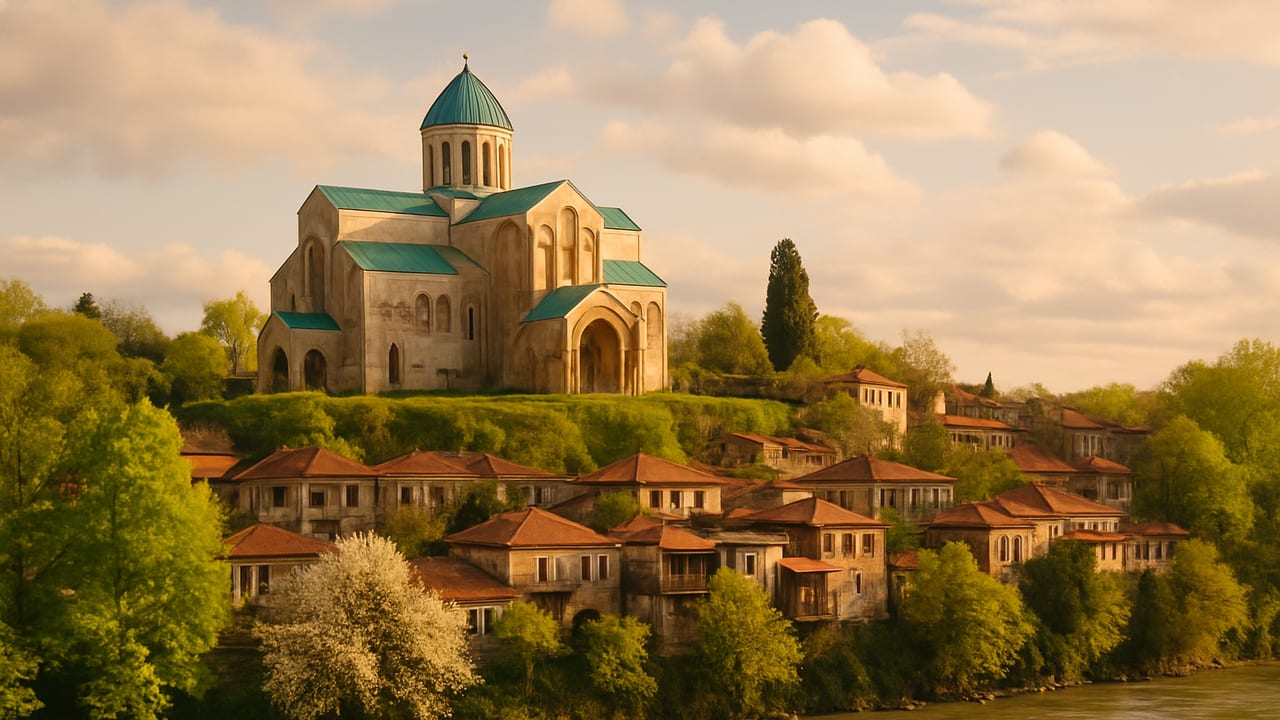
The best time to visit Kutaisi is May or late September — both months combine the year’s driest weather with comfortable temperatures, and May adds the city’s own chamomile festival on top. June through August run a few degrees warmer but bring noticeably more rain and higher flight and hotel prices than the shoulder months do, and winter, while the cheapest and quietest option, trims real hours off canyon and cave day trips. Which of those trade-offs matters most to you is really what decides your month, not the calendar alone.
Why “Spring or Fall” Isn’t Quite the Full Answer
Most general guides to Georgia repeat the same shorthand — spring and fall are best, summer is hot, winter is cold — and it’s not wrong, exactly. It’s just imprecise in a way that matters for Kutaisi specifically. Kutaisi’s rainfall doesn’t peak in spring the way that shorthand implies; it actually climbs steadily through autumn, with November averaging nearly twice May’s rainfall total. A traveler who books “fall” assuming it mirrors spring’s dry stretch can end up with a wetter week than they planned for, especially later in the season.
That distinction matters more here than in a city built around indoor sights. Kutaisi’s best attractions — Okatse Canyon’s cliffside walkway, Martvili Canyon’s boat ride, Prometheus Cave’s underground route — are outdoor and, in a couple of cases, weather-dependent enough to close temporarily in bad conditions. Picking a month by rainfall total rather than by season name is a genuinely different exercise here than the generic advice suggests.
A Composite Case: The Autumn Trip That Assumed Too Much
Picture a fairly common plan: a traveler books a long weekend in Kutaisi for early November, reasoning that “fall” worked well for a Tbilisi trip the previous year and should transfer over. That’s a composite scenario, not one specific trip, but it reflects a plausible mistake — treating one region’s shoulder season as interchangeable with another’s, or one month of a season as representative of the whole thing.
November in Kutaisi turns out to be the wettest month on the calendar, averaging close to 4 inches of rain against May’s roughly 2 inches, and daylight has already shortened to around ten hours. The Okatse Canyon walkway, an exposed metal structure bolted to a cliff face, closes temporarily in poor weather and high wind — exactly the kind of day a wet November afternoon can produce. The traveler in this scenario spends a rescheduled day trip waiting out rain in a Kutaisi café instead of on the canyon walkway, and only gets a shortened version of the trip in on the last afternoon before flying out.
None of that makes November a bad time to see the city center itself — Bagrati Cathedral and the Green Market don’t care about rain. It does mean a day-trip-heavy itinerary needed a different month, or at least a spare day built in as a buffer.
The Pattern Worth Remembering
Kutaisi’s weather calendar rewards checking the actual month, not just the season name. Early autumn (September) still resembles the dry, mild stretch most guides mean by “fall,” but late autumn (November) has already shifted into the wettest weather of the year. The same gap exists at the other end of spring — April is noticeably cooler and slightly wetter than May, even though both fall under the same “spring” label. If your itinerary leans on outdoor day trips, the specific month carries more weight than the season it belongs to.
Kutaisi’s Weather, Month by Month
Average daytime highs and monthly rainfall, per long-term climate records compiled by Weather Spark and useful as a planning baseline rather than a guarantee for any specific week:
- January: 49°F (9°C) high, wettest and coldest month, occasional sleet or light snow.
- February: 52°F (11°C) high, similar rainfall to January, coldest overnight lows.
- March: 58°F (14°C) high, rain easing off from winter’s peak.
- April: 67°F (19°C) high, mild but still noticeably wetter than May.
- May: 75°F (24°C) high, the driest month and one of the warmest shoulder months.
- June: 81°F (27°C) high, warm and increasingly humid, rain picking back up.
- July: 85°F (29°C) high, hot and humid, the peak tourist month.
- August: 85°F (29°C) high, similar to July, still busy.
- September: 79°F (26°C) high, warm with rainfall beginning to climb.
- October: 69°F (21°C) high, cooler with rain increasing further.
- November: 58°F (14°C) high, the wettest month of the year.
- December: 51°F (11°C) high, cold and rainy, short daylight.
These are long-run averages rather than a forecast — check closer to your travel dates for the actual conditions on a specific week, especially for a canyon day trip where a single wet day can change the plan.
Season by Season, With the Trade-Offs Made Explicit
Spring (April-Early June): Building Toward the Year’s Best Weather
April is pleasant but still cool and a touch wet; by May, Kutaisi hits its driest, most reliably warm stretch of the year. May also brings Gviriloba, also known as Kutaisoba — the city’s own day, held every year on May 2, with a morning service at Bagrati Cathedral followed by music, food stalls, and locals in traditional dress handing out chamomile flowers (gvirila in Georgian) around the city center, a tradition dating back to a 1921 charity drive by local schoolgirls. Landing a trip around that date turns an ordinary city stop into something with a genuine local event attached, without the crowds or prices of peak summer.
Summer (June-August): Warm, Busy, and the Year’s Most Expensive Stretch
July and August are the hottest months, with highs regularly touching 85°F (29-30°C) and real humidity that makes an afternoon walk between the old town and the market feel more draining than the same distance in May. This is also peak season for both flights and accommodation — Wizz Air’s Kutaisi routes and city hostels alike see their highest prices of the year here, following the same demand curve as most of Europe’s summer travel market. It’s a workable time to visit if the heat doesn’t bother you and the day trips matter more than the budget, but it isn’t the best value on the calendar for a similar amount of good weather.
Autumn (September-November): A Strong Start That Fades Fast
September largely continues summer’s warmth with rain still relatively light, making it arguably tied with May as the best all-around month — warm days, thinning crowds as the peak season ends, and Rtveli, Georgia’s countrywide grape harvest, running through Imereti’s vineyards into October. That’s a genuine reason to build a village wine-tasting into an Imereti day trip if your dates line up. October cools further and rainfall keeps climbing, and by November, as the composite case above shows, Kutaisi has become the wettest place on its own calendar. Early autumn is a strong pick; late autumn is the point where “fall” as a season label stops matching the actual conditions.
Winter (December-February): Cheapest and Quietest, With Real Trade-Offs
December through February bring the coldest temperatures of the year, occasional sleet or light snow (mostly in January and February), and the shortest daylight, down to around nine hours in December. It’s also the cheapest and least crowded time to visit — hostel prices bottom out, the old town empties of tour groups, and flights into Kutaisi Airport are at their least expensive outside of specific holiday spikes. The trade-off is entirely about day trips: shorter daylight leaves less time for Prometheus Cave, Okatse Canyon, or Martvili Canyon in a single outing, and Okatse’s exposed cliffside walkway can close temporarily in poor weather — worth checking Kutaisi’s official tourism site for current conditions before building a winter day trip around it. Winter suits a traveler focused on the city center itself far better than one building a trip around the canyons.
Matching the Month to What You’re Actually Doing
Run through these before locking in dates, since the “best” month changes depending on the answer:
- Is a canyon or cave day trip the main reason you’re going? Aim for May or September. Both combine low rainfall with comfortable temperatures, which matters more for Okatse’s walkway and Martvili’s boat ride than it does for a city walk.
- Are you flying in purely because Kutaisi Airport had the cheaper Wizz Air fare? Shoulder season and winter both beat summer on airfare, since Kutaisi’s routes follow the same seasonal pricing as the rest of Wizz Air’s network. Book a few months ahead rather than chasing a specific off-peak week for the biggest savings.
- Do you want to catch a local event rather than just good weather? May 2 for Gviriloba, or September into October for Rtveli’s grape harvest season across Imereti’s vineyards.
- Are you budget-conscious above everything else? Winter, with the caveat that day-trip time drops along with the price.
- Are you just passing through on a layover, without day trips booked? Nearly any month works for the city center alone — Bagrati Cathedral, the Green Market, and the riverside walkway aren’t especially weather-dependent, so this is one of the few questions on this list where the calendar barely matters.
The Takeaway
May and late September are the strongest all-around picks for Kutaisi — low rainfall, comfortable heat, and in May’s case, a genuine local festival worth timing a trip around. Summer trades a few extra degrees for more rain, more crowds, and higher prices; winter trades day-trip time for the lowest cost and quietest streets of the year. The detail worth remembering past the generic “spring or fall” advice is that Kutaisi’s rain climbs through autumn rather than staying low the whole season, so a late-October or November booking deserves a closer look at that specific month’s numbers rather than a season label.
If you’re weighing how many days to give the city itself versus the canyons and monasteries around it, our guide on whether Kutaisi is worth visiting covers that groundwork. For wet canyon walkways and cave paths whatever month you land in, our guide to waterproof hiking shoes is worth a look before you pack, a compact dry bag earns its space for the Martvili Canyon boat ride specifically, and if a long budget-airline connection is part of your route, our guide to compression socks for cold weather covers gear that matters more on long travel days than most packing lists admit. If you’re comparing flight and hotel options once you’ve picked a month, Expedia’s hotel search for Kutaisi is a reasonable way to check current rates before you commit to dates.
Frequently asked questions
- What is the best month to visit Kutaisi?
- May and late September are the strongest single months — warm days, the lowest rainfall totals of the year, and (in May's case) Kutaisi's own chamomile festival. June through August run slightly warmer but wetter and busier, so May and September edge them out on balance rather than on temperature alone.
- Does it snow in Kutaisi?
- Occasionally, mostly in January and February when overnight lows drop below freezing and rain turns to sleet or light snow. It rarely settles for long in the city itself, though nearby hills and canyon trailheads can hold snow longer than the valley floor does.
- What is the rainiest time of year in Kutaisi?
- November, followed closely by October and September — precipitation actually climbs through autumn rather than peaking in spring, which catches a lot of visitors off guard given how often "spring or fall" gets repeated as the blanket answer. May is the driest month of the year.
- Is Kutaisi hot in summer?
- Yes, by Georgian standards. July and August highs regularly reach 85°F (29-30°C) with real humidity, and it's the busiest and most expensive stretch of the year for flights and accommodation. It's a fine time to visit if you don't mind the heat, but it isn't the weather bargain that May or September offers for a similar amount of sunshine.
- Is winter a bad time to visit Kutaisi?
- Not a bad time, just a narrower one. The city itself — Bagrati Cathedral, the Green Market, the riverside walkway — works fine in winter and comes with the lowest prices and thinnest crowds of the year. Day trips are the trade-off: shorter daylight cuts into canyon and cave time, and Okatse Canyon's walkway can close temporarily in poor weather.
- When is the cheapest time to fly into Kutaisi Airport?
- Shoulder season and winter, broadly — Wizz Air's Kutaisi fares follow the same seasonal demand curve as most of its European network, with the lowest prices outside the June-through-August peak and around major Georgian and European holidays. Booking a few months ahead matters more for price than picking an exact off-peak week.
- What festivals happen in Kutaisi and when?
- Gviriloba (also called Kutaisoba), the city's own day, falls on May 2 every year, with a service at Bagrati Cathedral followed by music, food stalls, and locals handing out chamomile flowers around the city center. Rtveli, the countrywide grape harvest, runs through Imereti in September and October and is a good reason to time an autumn visit around a village wine-tasting rather than the city center alone.