Hidden Gems in Kutaisi: 8 Spots Most Visitors Miss
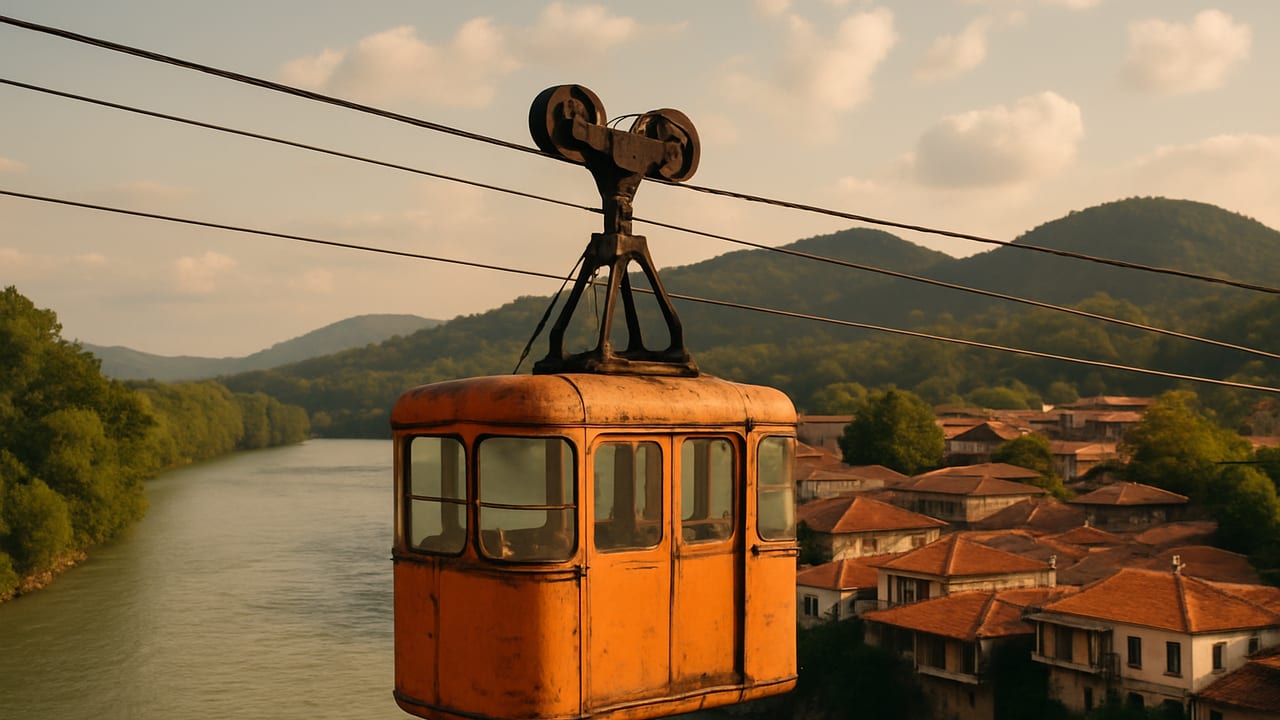
Kutaisi’s hidden gems aren’t hard to reach — most sit within a 20-minute walk of the old town, and the furthest is a short cable car ride across the Rioni River. They’re overlooked because nearly every Kutaisi guide repeats the same five stops (Bagrati Cathedral, the Green Market, the White Bridge, Gelati Monastery, Prometheus Cave) and stops there, so a chapel built into a 400-year-old oak tree, a Soviet-era cable car to a half-forgotten amusement park, and a book market that isn’t staged for tourists all go unmentioned.
None of what follows requires a driver, a booking, or an extra day. It requires knowing these exist before you’re back at the airport.
Why Most Kutaisi Guides Stop at the Same Five Places
Kutaisi gets covered two ways online: as a quick stopover before the “real” trip (Gelati Monastery, the canyons, Tskaltubo), or as a checklist of its most photogenic single landmark, Bagrati Cathedral. Both are genuinely worth doing — we’ve covered the day trips and the cathedral’s context separately in our guide to whether Kutaisi is worth visiting. But both approaches skip the city itself: the working book stalls, the 19th-century church quarters, the leftover Soviet infrastructure that Kutaisi never bothered to tear down.
That’s a gap, because a fair number of Kutaisi’s visitors arrive with unplanned time on their hands. Kutaisi International Airport is Georgia’s main budget-flight hub, and plenty of travelers land there because the fare was right, not because they built a detailed itinerary around the city. That’s exactly the situation this list is for.
A Composite Case: The Extra Half-Day Nobody Plans For
Picture a fairly typical case: a traveler lands on a budget flight with two nights in Kutaisi before heading north to Gelati and the canyons. Day one covers Bagrati Cathedral and the Green Market by early afternoon, with the rest of the day still open and nothing else on the list. This is a composite scenario, not one specific trip, but it’s close to how a lot of short Kutaisi stays actually unfold — the “must-see” landmarks take less time than visitors expect, and the afternoon that’s left over usually goes to a café near the plaza, because nothing else made it onto the plan.
A traveler who instead walks past the Green Market to the book stalls, cuts through to the Mon Plaisir Arch and the Royal Quarter behind it, and crosses the Red Bridge for the cable car ride to Besik Gabashvili Park spends that same afternoon seeing a version of Kutaisi that the standard checklist skips entirely — and it costs a few lari in cable car fares, not a taxi booking or a tour.
The Pattern Worth Remembering
The lesson isn’t that Kutaisi secretly rivals Tbilisi for things to do in the city center — it doesn’t, and the “hidden gems” framing shouldn’t oversell a genuinely small city. The lesson is that Kutaisi’s leftover afternoon time is worth more than a café, because what’s actually nearby doesn’t need a booking or a full day to reach. Closing that gap is mostly a matter of knowing these spots exist and roughly where they cluster.
The Spots Themselves, Grouped by How You’d Actually Reach Them
In the Old Town and Royal Quarter — All Walkable
Mon Plaisir Arch and the Wall of Love. Built in 1909 as the ornamental entrance to a cinema of the same name (the French phrase translates to “my pleasure”), the arch outlasted the cinema itself and now marks the entrance to Kutaisi’s Royal Quarter, a compact stretch of 18th- and 19th-century streets and buildings. The adjoining wall carries a rotating set of street murals, including a well-known 2016 piece by French artist Vinie Graffiti that’s since been partially repainted — worth seeing regardless, but don’t expect it to match the version in older photos.
The book market. A genuine secondhand book trade rather than a tourist stall, tucked just off the Green Market near the corner of Paliashvili and Tsminda Nino streets, under an old Soviet-era building locals still call Detski Mir (“children’s world”). Most of the stock is Georgian or Russian, with the occasional English title mixed in — worth a browse even if you’re not buying, for the sense of a market that exists for residents first.
Photo-cinema Chronicle Museum. A one-room museum on Newport Street with archival photographs, newspaper clippings, and film reels documenting old Kutaisi, generally open on weekday afternoons with free entry (donations are welcomed). Staff typically speak Georgian and Russian rather than English, so it rewards a translation app more than conversation — but the photographs need no translation to be worth the short stop.
Holy Annunciation Temple (Church of the Annunciation). On Varlamishvili Street in what was once Kutaisi’s French Quarter, this church traces back to Capuchin missionaries who settled on the left bank of the Rioni in the 17th century; King Solomon II later authorized a Catholic church on the site, completed in 1862 and now an Orthodox church, per the official Kutaisi tourism page, which lists it as open daily from 9 a.m. to 9 p.m. and free to enter. The Catholic-to-Orthodox history is a genuinely unusual detail for a Georgian church and rarely makes it into general city guides.
Mtsvanekvavila Pantheon. A hillside church and cemetery reached from Kibuli Street, a short uphill walk from the old town. The draw isn’t just the church itself but the view from the cemetery grounds, which takes in the old town rooftops, the Rioni River, and Bagrati Cathedral on its own hill across the way — a quieter, free alternative to the more crowded viewpoints near the cathedral itself.
A Short Detour Across the River
Kutaisi Botanical Garden’s oak-tree chapel. The garden itself dates to 1840 and sits about a kilometer from the central square, across the Red Bridge — home to nearly 700 plant species, per the official Kutaisi tourism page for the garden, which lists hours of 9:30 a.m. to 6 p.m. Its best-known feature is a small working chapel built into the hollow core of an oak tree estimated at around 400 years old, blessed by the Georgian Orthodox Church and still standing inside a tree that’s very much alive. It’s an odd, memorable stop that photographs well without needing to be staged for photographs.
The Soviet-era cable car to Besik Gabashvili Park. A short ride in a retro cabin crosses the Rioni River to a hilltop amusement park that still runs some of its original Soviet-era rides alongside newer additions. Fares reported by recent visitors run somewhere around 1 to 3 GEL each way — worth confirming at the kiosk rather than budgeting an exact number — and the two-minute crossing itself, with the town and river spread out below, is arguably a better reason to go than the park at the top. It’s the kind of quietly absurd, entirely earnest attraction that a bigger, more polished city would have replaced by now.
David Kakabadze Art Gallery and its sculpture courtyard. A small gallery on Rustaveli Avenue focused on Georgian art, including work by painter Niko Pirosmani, with an entrance fee reported at around 2 GEL and a visit that comfortably fits into 30 minutes. The gallery’s inner courtyard doubles as an informal storage yard for damaged Soviet-era statues removed from around the city — an unplanned, slightly melancholy sculpture garden that nobody designed on purpose but that’s become one of Kutaisi’s more distinctive small sights.
How These Fit Around a Trip You’ve Already Planned
If you’re using Kutaisi as a base for the region’s bigger day trips, these spots aren’t a competing itinerary — they’re what fills the gaps around it. Our guide to day trips from Kutaisi groups the monasteries, canyons, and Chiatura into four directional clusters, each of which eats most of a day. This list is built for the time on either side of those: an arrival afternoon before the first day trip, or a final morning before a flight, when a half-day tour isn’t realistic but an hour of walking is.
Practically, that means treating the Old Town cluster above as an easy add-on to any day that already includes Bagrati Cathedral or the Green Market, and saving the across-the-river cluster — the botanical garden, the cable car, the art gallery — for a specific free afternoon, since it’s a little more spread out and worth unhurried time rather than a rushed pass-through.
What’s Worth Carrying for a Day Like This
Nothing here demands trekking gear, but a few small things make the difference between a comfortable afternoon and an uncomfortable one:
- A daypack big enough for a water bottle, a light layer, and whatever secondhand book or small souvenir you pick up at the market — Kutaisi’s weather shifts over the course of an afternoon more often than the forecast suggests.
- Comfortable walking shoes rather than sandals — Mtsvanekvavila’s hillside path and the cobblestones around the Royal Quarter are uneven enough to notice.
- If a long budget-flight connection got you to Kutaisi in the first place, our guide to compression socks for cold weather covers gear that matters more on that kind of travel day than most packing lists admit, and our guide to TSA-approved toiletry bags covers the one security step that trips up first-time budget-airline flyers most.
How Much Time to Actually Set Aside
All eight spots fit comfortably into one full day, or split cleanly across two half-days if you’re already spending time on Bagrati Cathedral and the Green Market. The Old Town cluster — the arch, the book market, the small museum, the two churches — covers in a few unhurried hours on foot. The across-the-river cluster needs a bit more time because of the botanical garden and the cable car crossing, but still fits into a single afternoon. Neither requires the kind of advance booking or fixed departure time that the region’s monasteries and canyons do.
The Takeaway
Kutaisi’s real hidden gems aren’t hidden in the sense of being hard to find — they’re hidden in the sense that almost nobody writes about them, because the same five landmarks get repeated across nearly every guide to the city. An oak-tree chapel, a Soviet cable car, a French-quarter church with a Catholic-to-Orthodox history, and a sculpture courtyard nobody planned on purpose are all within walking distance or a short local ride of the old town, and none of them need a booking to see.
If you’re still deciding how many days Kutaisi itself deserves before you build a trip around Gelati Monastery and the canyons, our guide on whether Kutaisi is worth visiting covers that groundwork, and our guide to where to stay in Kutaisi covers which neighborhood puts you closest to most of this list. For the rest of the region, our Caucasus & Central Asia destination guides cover the wider trip beyond this one city.
Frequently asked questions
- Is the oak-tree chapel in Kutaisi Botanical Garden really built inside a living tree?
- Yes. It's set into the hollow core of a roughly 400-year-old oak at the center of the garden, and the tree is still alive and budding each spring around it. It's a genuine working chapel, blessed by the Georgian Orthodox Church, not a replica or a prop.
- How much does the Kutaisi cable car cost?
- Fares reported by recent visitors run somewhere around 1 to 3 GEL each way, with some sources describing a lower local rate and a higher foreign-visitor rate. It's cheap either way — worth confirming at the kiosk rather than budgeting an exact figure, since the pricing isn't consistently posted online.
- Where is the book market in Kutaisi?
- It sits just off the Green Market, near the corner of Paliashvili and Tsminda Nino streets, under an old Soviet-era building locals still call Detski Mir ("children's world"). It's a genuine secondhand book trade rather than a tourist stall, so most of the stock is in Georgian or Russian with the occasional English title mixed in.
- Can you see Kutaisi's hidden gems without a car or a tour?
- Yes — every spot on this list is either a walk from the old town or a short, inexpensive local trip (a cable car ride or a stroll across the Red Bridge). None of them require booking a driver or a tour desk, which is what separates them from Kutaisi's day trips into the surrounding region.
- Is the Mon Plaisir Arch and its street art still there?
- The arch itself, built in 1909 as the entrance to a cinema of the same name, is still standing at the entrance to the Royal Quarter. Some of the murals along the adjoining Wall of Love have been repainted or partially covered over the years, including a well-known 2016 piece, so what you see in older photos may not match what's on the wall today.
- How many days should you set aside to see these spots?
- A single full day covers the whole list at a comfortable pace, or you can split it across two half-days if you're also fitting in Bagrati Cathedral and the Green Market. None of these require an overnight or advance booking, so they slot easily into whichever days you're already spending in Kutaisi itself.