Where to Stay in Kutaisi, Georgia: A Neighborhood Guide
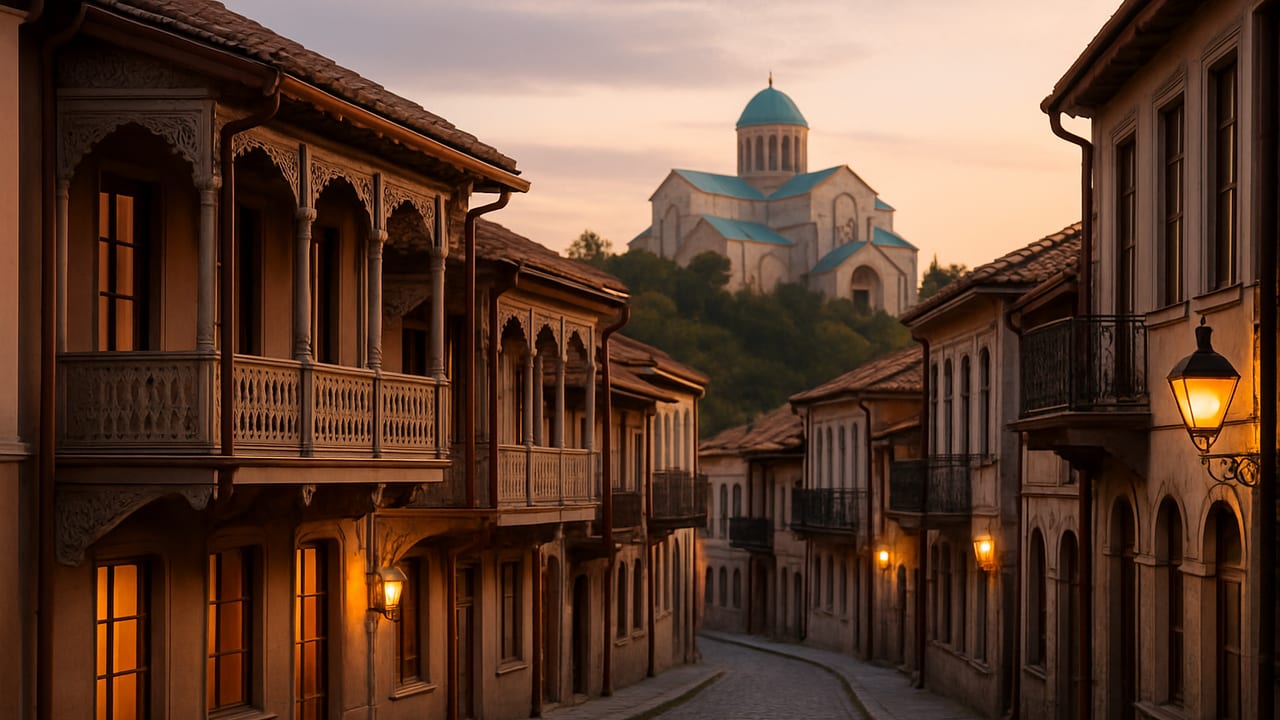
For most travelers, the best place to stay in Kutaisi is Old Town, the compact stretch between Colchis Fountain and the White Bridge on the Rioni River’s east bank. It puts the Green Market, most restaurants, and the walk up to Bagrati Cathedral within reach on foot, and it has the widest range of accommodation in the city. The exception is anyone basing a specific day trip or a very early or late flight around their stay — for those travelers, the right neighborhood depends more on which direction they’re heading next than on being close to the cathedral.
Why the Neighborhood Choice Matters More in Kutaisi Than It Sounds
Kutaisi is small enough that almost any address puts you within a 20-minute walk or a short taxi ride of the center. That makes the neighborhood question feel lower-stakes than it would in a bigger city — and for a short stay focused purely on Old Town and Bagrati Cathedral, it mostly is. But a meaningful share of Kutaisi visitors aren’t there purely to sightsee in town. Some are using it as a base for the canyons and monasteries outside the city. Others are passing through on a Wizz Air connection at Kutaisi International Airport and need one convenient night, not a neighborhood experience. Both groups end up asking the same question — where should I stay — but the right answer isn’t the same for each of them.
A Composite Case: Two Travelers, Two Bookings
Picture two travelers arriving in Kutaisi the same week. This is a composite scenario built from how these trips typically play out, not one specific booking. The first books a guesthouse near the train station in Balakhvani because it showed up cheapest on a booking site, without checking the map against where anything else in the city actually is. The second picks a small hotel in Old Town, a few minutes from Colchis Fountain, mainly because it was close to the photo of Bagrati Cathedral in their search results.
The Old Town booking turns out to be the better call for both of them, even though only one was trying to sightsee. The traveler near the station spends the first evening working out that dinner options nearby are thin and that reaching the market or the cathedral means a taxi each way, not a walk. The Old Town traveler steps out the door into exactly the compact, walkable stretch that makes a short Kutaisi stay work in the first place — and when it’s time to book a driver for Okatse Canyon the next morning, the pickup point is a five-minute walk rather than a taxi across town first.
The Pattern Worth Remembering
Kutaisi’s size means location mistakes rarely ruin a trip, but they do add friction — extra taxi rides, thinner dinner options, a longer walk back after dark — that a slightly more deliberate choice avoids for free. The neighborhoods aren’t interchangeable just because they’re all technically close. What matters is matching the area to what you’re actually in Kutaisi to do: sightsee on foot, use the city as a day-trip base, or get one convenient night near a flight.
Kutaisi’s Neighborhoods, Area by Area
Old Town: The Default Choice for Most Visitors
The stretch between Colchis Fountain and the White Bridge, on the east bank of the Rioni River, is Kutaisi’s tourist and commercial core. The Green Market, most of the city’s restaurants and cafés, and the walking route up to Bagrati Cathedral all sit within a 10-to-15-minute walk of most Old Town addresses. It also has by far the widest choice of accommodation — hostel dorms, budget guesthouses, and a handful of boutique and mid-range hotels, including international-chain options like Best Western Kutaisi City Center.
This is the right default for a short stay, a first visit, or anyone who wants to walk to dinner rather than plan around a taxi. It’s also the most expensive area on average, though “most expensive” in Kutaisi still means noticeably cheaper than an equivalent central location in Tbilisi.
The Riverside Near the Red Bridge
A short walk north or south along the Rioni from Old Town, this stretch trades a little bit of proximity to the market for river views and a quieter evening. Accommodation here skews toward boutique guesthouses and mid-range hotels rather than hostels, and the walking path along the river makes it a genuinely pleasant few minutes into the center rather than a real inconvenience.
It suits travelers who want to be close to everything Old Town offers without being directly on top of the busiest streets, and it’s a reasonable middle option between Old Town’s convenience and Gora’s quiet.
Gora: Quiet, Hilltop, and Close to Bagrati Cathedral
Gora sits on the hill where Bagrati Cathedral itself stands, overlooking the old town and the river below. Accommodation is thinner here than in Old Town or along the riverside — mostly small guesthouses rather than hotels — but the payoff is a quieter stay with the cathedral and its viewpoint essentially on your doorstep, plus a walk down into Old Town that takes 10 to 15 minutes rather than a taxi.
This is the pick for travelers who want a calmer evening and don’t mind the walk (and, going the other direction, a modest uphill return) over having the absolute widest choice of restaurants outside the door.
Sapichkhia: The Budget Option That Doesn’t Cost You Convenience
Southeast of the center, Sapichkhia is a working residential district with cheaper guesthouse rooms and less tourist markup on food than Old Town. It’s not a scenic destination in itself, but it isn’t genuinely remote either — a short walk or an inexpensive taxi connects it to Old Town, so the savings here don’t come with much of a convenience penalty.
It suits budget-conscious travelers and anyone staying more than a couple of nights who’d rather put the savings toward day-trip transport or entrance fees than a marginally shorter walk to the market.
Balakhvani and the Area Near the Train and Bus Station
Balakhvani, around Kutaisi’s train and bus station, is a legitimate, well-connected neighborhood rather than a fallback — but it sits far enough from Old Town that most of what draws visitors to Kutaisi means a taxi or marshrutka ride rather than a walk. It’s worth choosing deliberately if an early train to Tbilisi or an onward bus is the priority, not by accident because it showed up cheap in a search without a map check.
Matching Your Stay to Why You’re Actually in Kutaisi
The neighborhood breakdown above answers “which area,” but the more useful question for a lot of visitors is which of these three situations they’re actually in:
- A short city stay, one to three nights, centered on Kutaisi itself. Old Town or the riverside near the Red Bridge, without much debate. Both put the cathedral, market, and restaurants within a comfortable walk, which is what a short stay in a compact city is for.
- Using Kutaisi as a base for day trips. Still Old Town or the riverside, for a reason that has less to do with sightseeing and more with logistics: most drivers and tour pickups default to central addresses, and starting the day already a walk from your pickup point beats starting it with a taxi to get there. If you already know which day-trip cluster you’re prioritizing — the monasteries and Tskaltubo to the north, the canyons to the west, or Chiatura to the east — a central Old Town or riverside address keeps the option open without committing you to one direction over another.
- A layover or short connection around a budget flight. This is the one case where staying literally near Kutaisi International Airport can make sense, but only if your flight lands very late or leaves very early and you genuinely just need a bed. The area immediately around the airport has little beyond the terminal itself, so it trades away everything that makes a Kutaisi stay worthwhile in exchange for shaving 20 to 25 minutes off a single taxi ride. For anything longer than one inconvenient night, Old Town is still the better call, even on a tight connection — it’s close enough to the airport road that the extra drive time is a reasonable trade for an evening spent somewhere worth being.
What Accommodation Actually Costs
Kutaisi is one of the more affordable stops in an already budget-friendly country. Hostel dorm beds commonly start under $10 a night, simple guesthouse rooms often land somewhere in the $20 to $40 range, and boutique or mid-range hotels — including Old Town’s international-chain options — typically run $40 to $80, climbing higher for a small number of upscale properties. These figures move with season and exchange rate, so treat them as a starting range rather than a quote, and check current listings before you book. Expedia’s hotel search for Kutaisi is a reasonable way to compare current rates and availability by neighborhood once you’ve picked an area.
The Takeaway
Old Town is the right default for most Kutaisi stays, and it stays the right choice even for day-trippers, since central addresses keep tour pickups and driver logistics simple regardless of which direction you head the next morning. Gora rewards travelers who want quiet over convenience, Sapichkhia rewards those prioritizing budget, and Balakhvani only makes sense if an early train or bus genuinely outranks everything else on your list. The one trade worth avoiding by default is booking near the airport itself for anything longer than a single inconvenient-hours layover — it saves a short taxi ride at the cost of everything that makes staying in Kutaisi worth doing in the first place.
If you’re still deciding how much time Kutaisi itself deserves before you lock in a neighborhood, our guide on whether Kutaisi is worth visiting covers that groundwork, and our breakdown of day trips from Kutaisi covers which direction to plan a central stay around. If you’re traveling on your own, our guide for solo travelers in Kutaisi covers what changes about picking a neighborhood without a travel companion to split a taxi with. For the wet canyon walkways and cave paths near most of these day trips, our guide to waterproof hiking shoes is worth a look before you pack, and for long travel days connecting through a budget-airline hub like Kutaisi, our guide to compression socks for cold weather covers gear that matters more than most packing lists admit.
Frequently asked questions
- What's the best area to stay in Kutaisi for first-time visitors?
- Old Town, roughly between Colchis Fountain and the White Bridge. It puts the Green Market, most restaurants, and the walk up to Bagrati Cathedral within easy reach on foot, and it's the area with the widest range of accommodation, from hostel dorms to boutique hotels.
- Is it better to stay near Kutaisi Airport or in the city center?
- The city center, unless your flight lands very late or leaves very early. The airport sits roughly 20 to 25 minutes outside town by taxi, with little around it beyond the terminal itself, so staying there only pays off if you're minimizing a single overnight connection rather than actually spending time in Kutaisi.
- Which Kutaisi neighborhood is best for budget travelers?
- Sapichkhia and the streets around it, southeast of the center, tend to have the cheapest guesthouse rooms and the least tourist markup on food. It's a short walk or a cheap taxi from Old Town rather than genuinely far, so the savings don't cost you much in convenience.
- How much does accommodation in Kutaisi typically cost?
- Kutaisi runs cheaper than Tbilisi across the board. Hostel dorm beds commonly start under $10 a night, simple guesthouse rooms often land somewhere in the $20-$40 range, and boutique or mid-range hotels typically run $40-$80, climbing higher for the handful of upscale and international-chain options. Rates move with season and exchange rate, so treat these as a starting range rather than a quote.
- Is it safe to walk back to your accommodation at night in Kutaisi?
- Generally yes in the central areas — Old Town and the riverside streets near it are well-lit and busy enough in the evening that walking back from dinner isn't a particular concern. The usual precautions apply further from the center or late at night: stick to main streets, and take a taxi rather than walking if a guesthouse sits somewhere unlit or unfamiliar.
- Do you need to book accommodation in Kutaisi in advance?
- Not urgently outside peak season, since Kutaisi has more guesthouse and hostel capacity than its visitor numbers usually fill. Booking a few days ahead is still worth it in July and August, or if you've landed on a specific budget-flight schedule and don't want to be searching for a room after an evening arrival.
- Should you stay near Kutaisi's train and bus station?
- Only if an early departure makes it worth trading walkability for convenience. The Balakhvani area around the station is a legitimate, well-connected neighborhood, but it sits far enough from Old Town that you'll be taking a taxi or marshrutka into the center for most of what you came to Kutaisi to see.