Is Semuc Champey Worth Visiting? The Honest Answer
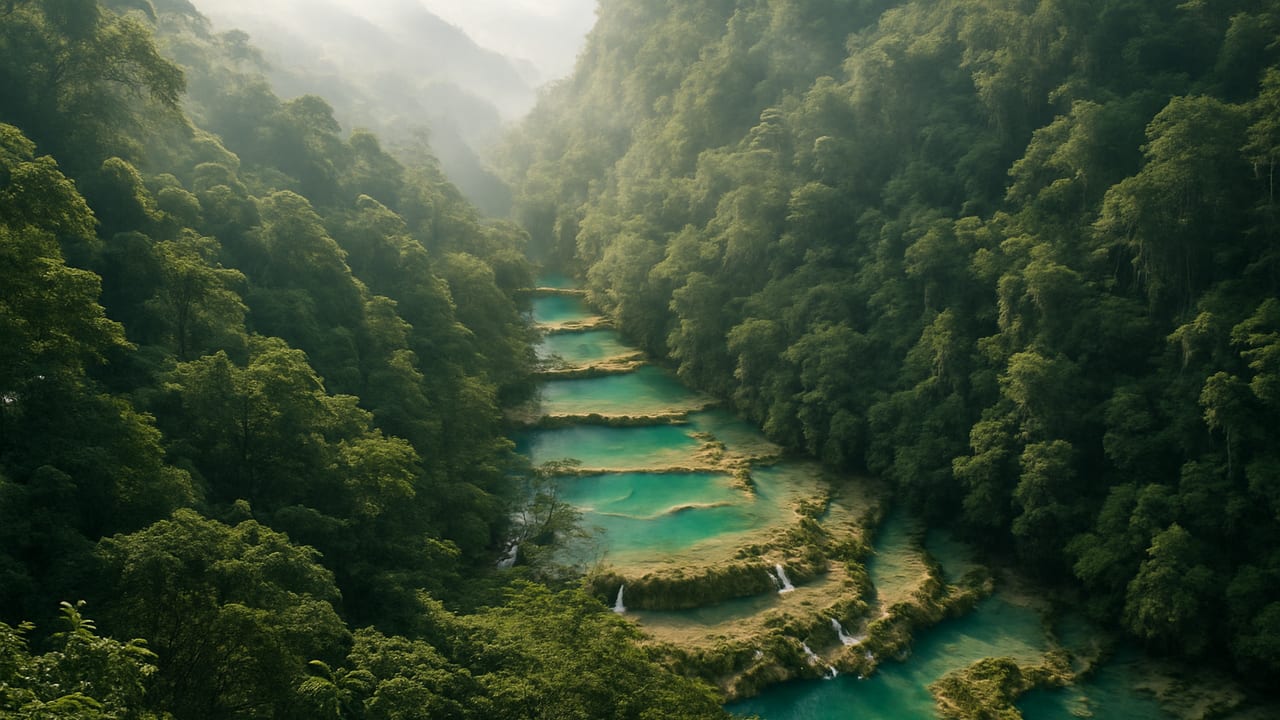
Semuc Champey is worth visiting — the stepped turquoise pools cut into limestone above a river that disappears underground are among the most photographed natural sites in Guatemala, and in person they hold up. The honest complication isn’t the destination itself; it’s the detour. Semuc Champey sits deep in Alta Verapaz, far from Guatemala’s main tourist circuit, and reaching it costs most travelers a full day of rough travel each way. Whether that detour is worth it depends less on the pools, which are reliably beautiful, and more on how much time you actually have and how you feel about a long, winding bus ride for a payoff that lasts one or two days.
What Semuc Champey Actually Is
Semuc Champey is a roughly 300-meter limestone landbridge in Lanquín, in Guatemala’s Alta Verapaz department, formed where the Cahabón River drops into a sinkhole and continues underground beneath a stack of stepped, calcium-fed pools. The name comes from Q’eqchi’ Maya, the language of the surrounding communities, and translates loosely to “where the river hides under the stones” — an accurate description once you’re standing on the bridge and can hear the river roaring beneath your feet without being able to see it. Guatemala’s protected-areas authority, CONAP, declared it a Natural Monument in 2005, covering roughly 17 square kilometers of surrounding jungle.
The turquoise color that shows up in every photo comes from the same geology: the water carries a high concentration of calcium carbonate, the same mineral that built the limestone bridge itself, and it’s what gives the pools their distinctive blue-green tint rather than the murkier brown of the river running beneath them.
That protected status matters for one practical reason: it’s part of why there are no shops, restaurants, or vendor stalls inside the park itself. Bring water, food, and cash with you, because once you’re through the entrance there’s nowhere inside to buy any of it.
A Familiar Guatemala Itinerary Mistake
Picture a fairly typical two-week Guatemala trip: Antigua for a few days, Lake Atitlán for a few more, then Tikal before flying home. Semuc Champey gets added almost as an afterthought — a striking photo in a guidebook, slotted in as a single overnight between Atitlán and Flores because it looked close enough on the map.
It isn’t close on the map in any way that matters. The shuttle from Antigua or Lake Atitlán to Lanquín, the small town nearest the park, takes somewhere in the range of eight to ten and a half hours each way, mostly on winding mountain roads that turn a look at the map into a very different experience in the seat of a minivan. A traveler who budgets one overnight in Lanquín ends up spending two full travel days to get roughly four or five usable hours inside the park itself — a swim, the viewpoint hike, maybe one more activity if the timing works out, and then straight back onto the road the next morning before any of it has really settled in.
That’s the pattern worth remembering before you book anything: Semuc Champey’s location is the real cost, not the entrance fee, and it’s a cost measured in days, not dollars.
Is the Detour Worth It? A Framework for Deciding
- How many days you have left. Two travel days round trip is a much bigger share of a 10-day trip than a 21-day one. If Guatemala is a quick stop on a longer Central America loop, the math gets harder to justify.
- Whether you’re already headed that direction. Travelers connecting overland between the highlands and Flores or Tikal are already passing reasonably close to Alta Verapaz, so the detour costs less when it’s layered onto a route you’d be driving anyway rather than a dedicated there-and-back trip.
- How much you value this specific kind of view. If turquoise stepped pools in deep jungle are the thing that got you looking at Guatemala in the first place, that’s a different calculation than if it’s one bullet point among many on a checklist.
- Your tolerance for long bus rides on rough roads. The shuttle itself is part of the cost, not just a delivery mechanism to the destination — motion sickness and fatigue are real factors on an eight-hour-plus mountain road trip.
Weigh those four and most travelers land in one of two places: either Semuc Champey becomes a genuine highlight worth building two or three days around, or it’s reasonably cut from a shorter itinerary in favor of a closer, equally striking stop.
Getting to Semuc Champey
- From Antigua or Lake Atitlán: a direct shuttle to Lanquín, roughly 8 to 10.5 hours, commonly priced somewhere in the $20-40 USD range depending on the operator and season. Shuttle companies update fares and schedules close to travel dates, so check current pricing before booking rather than relying on older trip reports.
- From Flores, near Tikal: similarly around 8 hours by shuttle, making Semuc Champey a reasonable link between the ruins and the highlands if you’re routing that way regardless.
- Once in Lanquín: the park itself is about 11 km outside town on an unpaved road. Shared pickup trucks run from the town center for a few Quetzales each way (roughly $2-3 USD), take about 30 minutes, and are the standard way in for anyone not already staying at a hostel within walking distance of the entrance.
- Walking is possible — about 11 km, 2.5 to 3 hours each way — but most travelers skip it given the heat and the truck’s low cost.
A less common alternative is routing through Río Dulce and Cobán instead of coming directly from Antigua or Atitlán, which some travelers do if they’re already working through Guatemala’s Caribbean coast or the Verapaz region on a slower overland trip. It doesn’t save meaningful time, but it does break the trip into shorter legs rather than one long shuttle day, and it opens up Cobán as a reasonable overnight stop with better food options than Lanquín itself.
Tour or Independent Visit?
Most hostels in Lanquín sell a full-day combo tour, typically around 150-160 Quetzales (roughly $20-21 USD), bundling transport to the park, the Kan’Ba caves, a rope swing, the mirador hike, and about an hour and a half of pool time into one organized day. It’s a reasonable option if you’re short on planning time or traveling solo and want built-in company for the cave scramble.
Going independently costs less and gives you control over timing, which matters most for beating the crowds to the mirador. The trade-off is arranging your own pickup truck, buying cave and tubing add-ons separately at the entrance, and not having a set schedule to lean on if you’re unsure how long each activity takes. Neither approach requires any skill or experience the other doesn’t — this is a logistics choice, not a safety one.
What There Is to Do Once You’re There
The Pools and the Mirador Viewpoint
Entry to the pools runs 50 Quetzales (roughly $6.50 USD), cash only. The pools themselves split into a lower cascade area and an upper area better suited for a slower soak, and most visitors do both. The mirador viewpoint, reached by a 30- to 45-minute uphill trail through the jungle, is where the postcard shot comes from — and also where lines form, since only a handful of people can stand at the best angle at once. The view earns the wait; the queue just doesn’t put that part on the brochure. Arriving early, before the day-tour groups from Lanquín’s hostels show up, is the single biggest thing you can do to avoid standing behind a dozen other travelers all taking the same photo.
Kan’Ba Caves
A short walk from the pools, the Kan’Ba caves add 60 Quetzales (about $8 USD) with a guide included, and run roughly an hour to an hour and a half. Guides hand out candles rather than headlamps, and the tour involves wading, climbing, and squeezing through narrow, chest-deep passages lit only by that candlelight — genuinely memorable, and not for anyone uneasy in tight, dark spaces.
Tubing on the Cahabón River
Inner tubes rent for around 50 Quetzales (about $6.50 USD) independently, or roughly 100 Quetzales (about $13 USD) as part of a hostel combo package. It’s a relaxed float in dry season and noticeably livelier in the rainy months. Don’t be surprised if a small flotilla of local kids drifts alongside your tube selling cold drinks from a floating cooler — it’s one of the more charming surprises nobody mentions in the brochure version of this trip.
Where to Stay
Most travelers choose between staying right at the park entrance or staying in Lanquín town itself, about 11 km away. Hostels near the entrance — places like Greengo’s and El Portal de Champey come up repeatedly in trip reports, alongside Utopia Eco Hotel a little further out — mean a five- to ten-minute walk to the pools instead of a truck ride, which matters most if you want to beat the morning crowds to the mirador. Zephyr Lodge, up on a ridge above the river, trades that convenience for one of the better views in town, worth considering if you’re staying two nights rather than passing through.
Lanquín town itself has more food options, a slightly wider range of price points from basic dorms to simple private rooms, and is the better base if you’d rather not be fully dependent on whatever a single entrance-side hostel serves for dinner. The cost of that choice is the daily truck ride each way, which adds up in time more than money.
Whichever you pick, Lanquín has limited and unreliable ATM access, so bring enough cash from Antigua, Cobán, or Flores before you head out. If you’d rather compare current rates across the area’s lodges before settling on one, Expedia’s hotel search for Lanquín is a reasonable starting point, though availability in such a small town is worth confirming well ahead of a dry-season visit.
What It Actually Costs
Broken down, a single day at the park itself looks something like this, per person, in Guatemalan Quetzales with rough USD equivalents at recent exchange rates (these shift, so treat them as a guide rather than a quote):
- Pool entry: 50Q (~$6.50)
- Pickup truck, round trip: 30-50Q (~$4-6.50)
- Kan’Ba caves with guide: 60Q (~$8)
- Tubing rental: 50Q (~$6.50)
- A simple meal in Lanquín: 25-50Q (~$3-6.50)
Add those up and a full, activity-packed day at Semuc Champey generally lands under $25-30 USD per person, cash only. The bigger line item is getting there in the first place: the $20-40 USD shuttle fare from Antigua, Lake Atitlán, or Flores dwarfs anything you’ll spend once you’ve arrived. Budget for the detour as a travel cost, not a park-admission cost, and the total stops feeling surprising.
Crowds, Best Time to Visit, and the Mirador Line
Dry season, roughly November through April, gives the clearest, most reliably turquoise water and the safest footing on the limestone and the mirador trail. Rainy season, May through October, can turn the water cloudy and the paths slippery, and heavy rain occasionally forces short closures — the upside is noticeably fewer visitors and somewhat lower prices. Weekends and Guatemalan holidays, especially Semana Santa (Easter week), bring the heaviest crowds regardless of season; a weekday visit, timed early, is the most reliable way to get the pools and the viewpoint without a wait.
What to Pack for Semuc Champey Specifically
Most general Guatemala packing lists cover the basics. A few things matter more here than that standard advice suggests:
- A dry bag, not just a waterproof phone case. You’ll move between tubing, the pools, and a candlelit cave scramble within the same few hours, and a dry bag built for water activities keeps a phone, cash, and a change of clothes safe without relying on a locker you’d rather not count on.
- A small headlamp, as backup to the provided candles. The Kan’Ba tour’s candles are part of the experience, but a headlamp means you’re not entirely dependent on a flame staying lit while you’re wading through chest-deep water.
- Grippy water shoes, separate from your hiking shoes. The limestone around the pools gets slick, and beach sandals aren’t enough here. Save your actual hiking shoes for the muddy jungle trail up to the mirador, and bring a cheap pair of water shoes just for the pools and caves.
- A packable rain layer, even in dry season. Alta Verapaz is rainforest, not just tropical, and a sudden downpour is common enough year-round that a packable waterproof jacket earns the small amount of pack space it takes up.
- Cash, in small bills. The park takes cash only for entry and every add-on activity, and Lanquín’s ATM access is thin. Stock up on Quetzales in Antigua, Cobán, or Flores before you leave.
- A toiletry bag that clears airport security without a repack for the flight into Guatemala City — the detail that trips up more travelers at the airport than anything that actually happens once they’re in Alta Verapaz.
Is Semuc Champey Safe?
Guatemala currently sits at Level 3, “Reconsider Travel,” on the U.S. State Department’s four-level advisory scale, reissued in March 2026 and citing crime risk including gang and cartel activity concentrated in specific areas. The zones named explicitly as highest-risk — San Marcos, Huehuetenango, and parts of Guatemala City including Zone 18 and Villa Nueva — don’t include Alta Verapaz or Lanquín, and the route through Antigua, Lake Atitlán, and Tikal remains well-traveled. That’s not a guarantee, though, and advisories get updated; check the current country page before locking in a route, particularly if any part of your itinerary strays from that well-worn path.
Day to day in Lanquín and at the park itself, most travelers’ actual safety concerns are far more mundane: slippery limestone edges around the pools, the unlit stretches of the Kan’Ba caves, and valuables left unattended near the lockers. None of that is specific to Semuc Champey’s reputation — it’s the same ordinary caution that applies to any remote swimming and cave site — but the lockers require your own padlock, and it’s worth packing one rather than discovering that on arrival.
A Sample Plan: Three Days Around Semuc Champey
- Day one — travel day. Take the morning shuttle from Antigua, Lake Atitlán, or Flores and accept that the day is mostly the trip itself. Arrive in Lanquín in the afternoon or evening and get settled.
- Day two — the park. Start early, before the tour groups arrive, and do the mirador hike first while the light and the crowds both favor it. Spend the rest of the day in the pools, with the Kan’Ba caves or a short tubing run if there’s time and energy left.
- Day three — one more activity, then move on. Use the morning for whichever of tubing or the caves didn’t fit the day before, then catch an afternoon or evening shuttle onward to Flores for Tikal, or back toward the highlands.
That’s the version that matches the two-night minimum most guides and lodges recommend. Cutting it to one night is possible but rushed — you’ll spend more hours getting there than you’ll spend in the water.
The Takeaway
Semuc Champey is worth visiting, and the pools themselves rarely disappoint the people who make it out there. The real decision is whether an eight-to-ten-hour shuttle each way is worth it for your specific trip, and that depends far more on how many days you have left than on anything about the destination itself. Budget two nights in Lanquín if you decide to go, bring cash and a dry bag, and treat the travel days as part of the experience rather than an inconvenience to rush through.
If you’re weighing Semuc Champey against another detour-heavy stop on a longer Latin America route, our guide to Salento, Colombia covers a similarly photogenic destination with a much shorter trip attached — useful context for deciding where a long travel day is actually worth spending.
Frequently asked questions
- Is Semuc Champey worth the detour if I'm short on time in Guatemala?
- It depends on how many days you have left more than anything about the destination itself. The shuttle alone runs roughly eight to ten and a half hours each way from Antigua, Lake Atitlán, or Flores, so a short one-week trip loses a meaningful share of its days to travel. If you have two weeks or more, or you're already routing overland between the highlands and Tikal, the extra days are much easier to justify.
- How many days should I spend at Semuc Champey?
- Most guides and hostels in Lanquín recommend at least two nights — one because the journey in eats most of a day, and a second for an unhurried day at the pools, the mirador hike, and one more activity like the Kan'Ba caves or tubing. Three days total, counting a travel buffer on each end, is a more realistic minimum than the one-night stop a lot of itineraries assign it.
- Is Semuc Champey safe to visit?
- Guatemala as a whole currently sits at Level 3, "Reconsider Travel," on the U.S. State Department's advisory scale, though the specific areas named as highest-risk don't include Alta Verapaz or Lanquín, and the route through Antigua, Lake Atitlán, and Tikal remains well-traveled. Check the current advisory before finalizing your route, and treat the park itself with the same ordinary caution as any remote swimming and cave site — slippery limestone and unlit cave sections are the realistic hazards, not anything specific to the destination's reputation.
- Do I need a guided tour, or can I visit Semuc Champey independently?
- Independent visits are entirely workable — pickup trucks run from Lanquín to the park entrance all day, and the pools, mirador hike, and Kan'Ba caves can all be done without a package. A hostel-organized tour mainly saves you from arranging transport and cave-guide logistics separately, which is worth it if you're short on planning time rather than because any part of the site actually requires one.
- What's the best time of year to visit Semuc Champey?
- Dry season, roughly November through April, gives the most reliable turquoise water and the safest footing around the pools and on the mirador trail. Rainy season, May through October, can turn the water cloudy and the paths slippery, and heavy rain occasionally closes the park briefly — the trade-off is fewer crowds and somewhat lower prices if you're going to be in the area regardless.
- How do I get to Semuc Champey from Antigua, Lake Atitlán, or Flores?
- Shuttle companies run direct routes from all three to Lanquín, the nearest town, taking roughly eight to ten and a half hours depending on the starting point and road conditions. From Lanquín, shared pickup trucks cover the remaining 11 km to the park entrance in about 30 minutes for a few Quetzales each way.
- How much does it cost to visit Semuc Champey?
- Entry to the pools runs 50 Quetzales, roughly $6.50 USD, and the Kan'Ba cave tour adds another 60 Quetzales, about $8, with a guide included. Add a pickup truck ride and a tubing rental, and a full day at the park itself generally stays under $25 USD — the shuttle to actually get there is the larger cost on the trip.