Where to Stay in Salento, Colombia: A Practical Guide
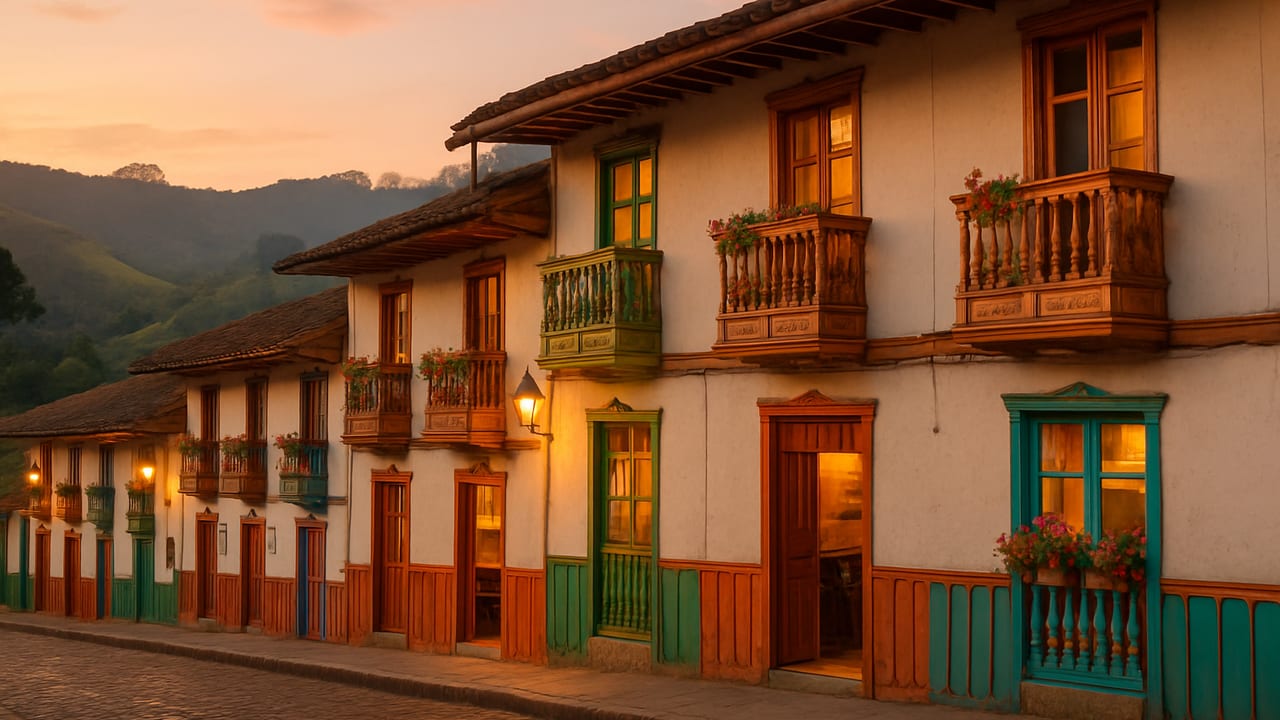
Stay in Salento’s town center if this is your first visit — it’s walkable to the plaza, the restaurants on Calle Real, and the jeep stop for Cocora Valley, and that convenience matters more here than almost any other single factor. Stay at a finca or eco-lodge just outside town if you’re prioritizing quiet and a view over walkability, ideally with a car or a transport plan already arranged. Staying directly at the edge of Cocora Valley itself is rarely necessary; it mainly suits hikers who want to be on the trail at first light and are willing to give up everything else Salento offers within walking distance.
Why the Town Itself Isn’t the Hard Part of This Decision
Salento is small enough that getting lost in it isn’t really possible — the colonial grid around Plaza de Bolívar covers a few blocks in every direction, and even the farthest guesthouse in the center is a ten-minute walk from the square. That’s not where the actual decision lives. The harder call is whether to stay inside that walkable core at all, or trade it for a quieter property outside town that comes with its own transport logistics.
Two things make that trade-off sharper here than in a lot of similarly sized towns. First, Salento sits at roughly 1,895 meters (6,217 feet) in the Andes, and nights regularly cool into the low teens Celsius — cold enough that a room without reliable hot water or extra blankets stops being a minor inconvenience and starts being a real problem at 9 p.m. Second, almost every worthwhile day trip, including Cocora Valley, runs through the same jeep stop at the Plaza de Bolívar, which means how far you are from that square affects every single day of your stay, not just one.
A Composite Case: The View That Cost a Morning
Picture a traveler booking a hillside eco-lodge sight-unseen, drawn in by a listing photo of mist rolling over the valley. It’s a real property, a 20-minute drive from town, with genuinely better views than anything in the center. What the listing doesn’t make obvious is that the shared jeeps to Cocora Valley only run from the Plaza de Bolívar in town, and the lodge’s own shuttle doesn’t start until 9 a.m. — well after the earliest, least crowded jeeps have already left.
The result is a later start on the one hike the trip was partly built around, arriving at the trailhead alongside the full midday crowd instead of the quiet early one. The lodge itself wasn’t a bad choice. It was the wrong choice for someone whose priority, whether they’d fully clocked it or not, was an early trail start.
That’s the pattern worth remembering: a property can be excellent and still be wrong for your specific days. Location decides which trade-off you’re making, not which listing has the nicer photos.
The Framework: What Actually Decides Where to Stay
Run a booking through these before anything cosmetic:
- How early does your Cocora Valley hike need to start? If you want the first or second jeep out, staying within walking distance of the Plaza de Bolívar matters more than any other feature.
- What’s your budget tier? Salento runs from hostel dorms to boutique fincas, and each tier buys something specific — see the breakdown below.
- Do you have a way to get back after dinner? Properties outside the center are fine if transport is arranged in advance; they’re a problem if you’re assuming you’ll flag down a taxi at 9 p.m.
- Does your room actually have reliable hot water and heating? At this altitude, it’s worth asking directly rather than assuming — plenty of budget guesthouses skip both, and a cold shower after a muddy hike is a worse ending to the day than a slightly pricier room would have been.
Salento by Area
Town center (Plaza de Bolívar and Calle Real). The default choice for most visitors, and for good reason — restaurants, the tejo courts, coffee shops, and the jeep stop for every day trip are all within a few minutes’ walk. Hostel dorm beds here run roughly $10-20 USD a night, in line with the rest of Quindío’s budget-travel scene. Private rooms in simple guesthouses and hotels typically land somewhere in the $35-70 USD range. Viajero Salento Hostel and similarly positioned hostels anchor the budget end; mid-range options like Hotel San Miguel de Salento sit a block or two off the square.
Just outside the center (toward Boquía or Via Palestina). A short walk or quick jeep hop from the plaza, this ring trades a few minutes of convenience for quieter streets and, often, a partial view. It’s a reasonable middle ground for travelers who want some distance from town noise without committing to a full finca stay, and pricing generally sits close to the town-center range.
Fincas and eco-lodges further out. Working or former coffee farms a 15- to 30-minute drive from town, offering mountain views, more space, and often a tour of the property’s own coffee production as part of the stay. These commonly run $90-200 USD or more a night, climbing further in the December-to-January high season, and nearly all require arranging a taxi or the property’s own shuttle rather than walking. Hotel Kawa Mountain Retreat and Terrazas de Salento are two of the more consistently recommended names in this tier. This is the right category if quiet and a view genuinely outrank convenience for your trip — not simply the “nicer” version of a town-center stay.
Near Cocora Valley itself. A small number of properties sit close to the valley’s entrance rather than in Salento proper. They suit one specific traveler: someone set on being first on the trail who’s willing to give up walkable access to everything else. For most visitors, staying in town and catching an early jeep accomplishes the same goal without the trade-off.
The Part Most Guides Skip: Getting Back From the Valley Changes Where You Should Stay
Willy jeeps — the open-backed vehicles that double as Salento’s local transit — leave from the Plaza de Bolívar roughly every 30 to 60 minutes starting around 6:30 a.m., for a few thousand pesos each way. The timing matters for lodging in a way most guides don’t connect: the return schedule thins out by late afternoon and isn’t fixed, so if you’re staying somewhere other than the town center, you need to know roughly when the last jeep back actually runs that day — not assume it matches a printed schedule. Ask at the square before you head into the valley, or have your accommodation confirm it for you. Travelers based right at the plaza don’t need to think about this at all, which is one more point in favor of the town center for a first visit.
Applying It: Matching the Stay to the Trip
A solo traveler wanting the earliest, least crowded start on the Cocora Valley hike should book a hostel or guesthouse within a few blocks of the Plaza de Bolívar — not the best-reviewed finca in the hills, however good the photos look. A couple without an early-hike priority and a rental car can reasonably choose a finca for one or two nights, treating it as a change of pace from the town rather than the whole stay. A group splitting costs often does better in a guesthouse with multiple rooms near the center than scattered across separate hostel beds. And anyone traveling in December or January should book whichever tier they want well ahead, since that stretch fills up faster than the shoulder months and jeeps run more frequently to match the crowds.
The Takeaway
Pick the town center if this is a first visit or an early hike matters to you — it removes the one logistical risk that catches people out here, which is being too far from the jeep stop when the morning actually arrives. Reserve a finca or eco-lodge for a second stay, or for a trip where quiet and a view outrank convenience, and confirm transport and hot water before you book rather than after you arrive.
If you’re still deciding how many days Salento deserves at all, our guide on whether Salento is worth visiting covers the town’s draws in more depth, and day trips from Salento breaks down the Cocora Valley jeep logistics mentioned above in full. Timing your visit against the region’s best time to visit also affects how far ahead you’ll need to book a finca in the busier months. For the cool, frequently wet mornings on the trail, our guides to waterproof hiking shoes and a packable waterproof rain jacket cover gear that matters more here than Salento’s postcard reputation suggests. Background on the UNESCO-listed Coffee Cultural Landscape that surrounds the fincas mentioned above is worth a read if you’re considering a longer farm stay, and colombia.travel’s official Salento page is a good starting point for the town’s architecture and food before you go. When you’re ready to compare current rates by area, Expedia’s hotel search for Salento is a reasonable place to start.
Frequently asked questions
- Is it better to stay in Salento's town center or outside it?
- Town center for most first-time visitors. It's walkable to the plaza, restaurants, and the jeep stop for Cocora Valley, and it doesn't require a taxi after dark. Staying outside town — at a finca or eco-lodge — trades that convenience for quiet and a view, which is worth it if you're renting a car or don't mind arranging rides in advance.
- Do I need a car to stay outside Salento's town center?
- Not strictly, but it helps. Most outlying fincas and eco-lodges can arrange a taxi or pickup, and some sit on a route jeeps already pass, but you're relying on someone else's schedule rather than walking. Confirm transport with the property when you book rather than assuming a taxi will be easy to flag down on the spot, especially after dinner.
- Is it worth staying near Cocora Valley instead of in Salento?
- Only if an early hike start matters more to you than everything else Salento offers within walking distance. The options near the valley are limited and mostly cater to hikers prioritizing a short walk to the trailhead. For most trips, staying in town and catching an early jeep covers the same goal without giving up the rest of the town.
- How many nights should I book in Salento?
- Two nights covers Cocora Valley plus one coffee farm tour without rushing either. Three or four gives you room for Filandia, a slower second coffee tour, or a weather delay, since Salento's frequent rain can push a planned hike to the next morning.
- Is Salento safe to walk around at night?
- Generally yes in the town center, which is small, well-lit near the plaza, and used to tourist foot traffic. Normal precautions apply — stick to lit streets, don't flash valuables — and it's worth checking the [U.S. State Department's current Colombia guidance](https://travel.state.gov/content/travel/en/international-travel/International-Travel-Country-Information-Pages/Colombia.html) for anything outside Salento itself before you build the rest of your route.
- Are there eco-lodges or farm stays near Salento?
- Yes, and they're one of the more distinctive options in the area — working or former coffee fincas just outside town that combine a room with a tour of their own land. They typically cost more than a town-center hotel and require arranging transport in advance, but they're a genuine alternative to a standard hotel room rather than a gimmick.