Waterproof Sleeping Bag Liner: What That Label Really Means
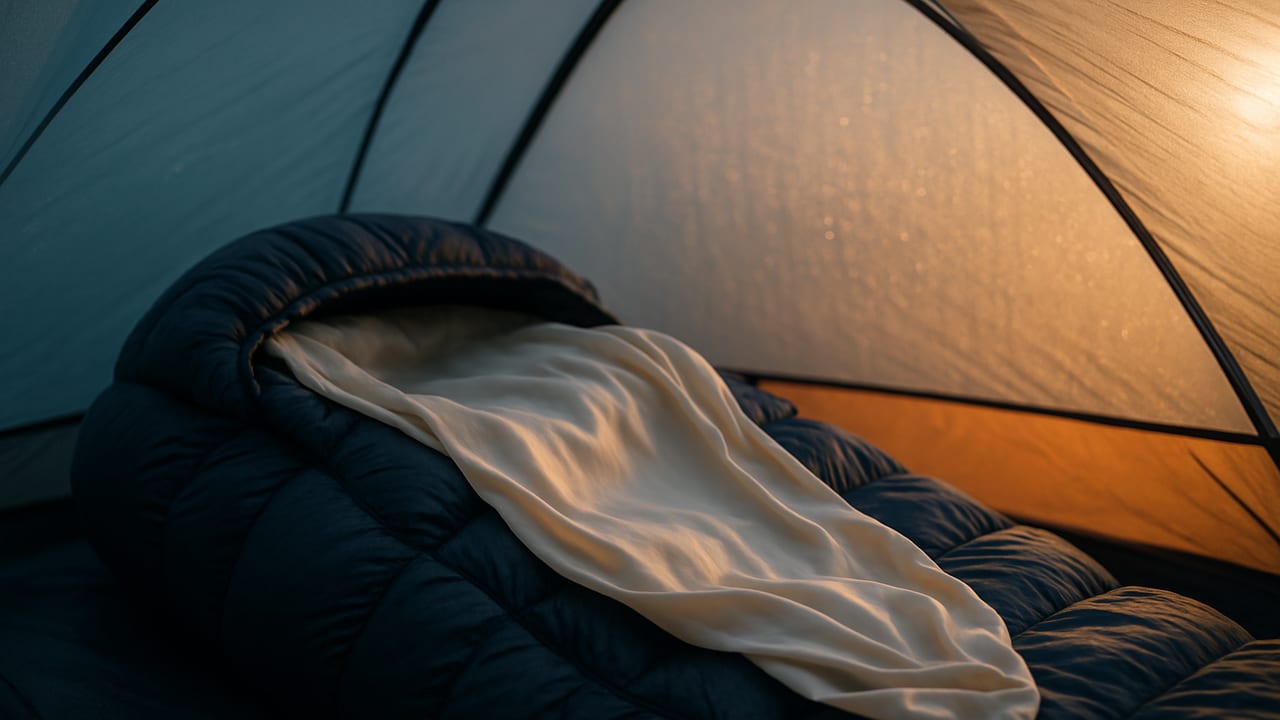
A sleeping bag liner labeled “waterproof” almost never is, not in the way a dry bag or a rain jacket is. Most liners sold with that word on the packaging are built from a durable water repellent (DWR) coated or laminated fabric that sheds ground moisture, tent condensation, and light dampness — useful, but a different job entirely from something rated to survive a soaking. If you actually need a liner to block moisture rather than just resist it, you’re looking for a vapor barrier liner, not a “waterproof” one, and the distinction is worth understanding before you buy either.
Why Getting This Wrong Costs You More Than a Damp Morning
The failure here is rarely dramatic. It’s a down sleeping bag that’s noticeably less warm on night three of a trip than it was on night one, with no obvious cause until you realize the foot end has been sitting against a slightly damp tent floor every night without a real barrier between them. Down loses loft when it gets wet, and loft is what actually keeps you warm — a liner that only resists light dampness doesn’t fix that if the real problem is standing moisture.
Picture a fairly typical multi-day trek near Torres del Paine, with Puerto Natales as the usual base: cold, damp nights, a tent that collects real condensation on the inside of the fly by morning, and a sleeping bag that’s doing double duty as both your warmth layer and, some mornings, a barrier against a slightly wet tent floor. A liner marketed as “waterproof” that’s actually just DWR-coated nylon will handle the condensation fine. It won’t do much if the tent floor itself is genuinely wet, and a traveler who bought it expecting full protection finds that out on the one night it would have mattered.
The useful lesson is straightforward: “waterproof” on a liner label is doing a lot of work, and it’s worth knowing exactly what work before you’re relying on it somewhere cold and damp.
What “Waterproof” on a Liner Label Actually Means
We’ve run into this same labeling problem before, with dry bags built for scuba diving — the word “waterproof” gets stretched to cover several genuinely different levels of protection. Sleeping bag liners split into three tiers the same way:
- DWR-coated or laminated liners. The most common product actually sold as a “waterproof sleeping bag liner.” A polyurethane (PU) film or a sprayed-on DWR finish sheds light rain, condensation, and ground dampness. It’s not sealed at the seams and isn’t rated for submersion — think water-resistant with a stronger word attached.
- Vapor barrier liners (VBLs). A genuinely different product, built to trap body moisture against your skin rather than keep outside moisture out. Worn directly next to the skin, underneath a regular liner and the sleeping bag itself, a VBL cuts evaporative heat loss and keeps that moisture from reaching — and freezing inside — the bag’s down insulation. It’s the standard tool for sub-freezing expedition camping, not everyday backpacking.
- Waterproof bivy bags. If the actual goal is keeping rain and ground moisture off the sleeping bag entirely, a bivy — a waterproof, breathable shell that goes over the whole bag — is doing that job properly. A liner, coated or not, was never built to be the sleeping bag’s only defense against real weather.
Most travelers searching for a “waterproof sleeping bag liner” actually want the first tier: something that adds a meaningful buffer against condensation and ground dampness without the weight or cost of a full bivy setup. Knowing that up front saves a return shipment to whoever sold you a liner that quietly wasn’t built for the second or third job.
Material Matters as Much as Any Waterproofing Claim
The coating decides how a liner handles moisture. The base fabric decides how it actually feels to sleep in, and that trade-off matters more day to day than the waterproofing claim does:
- Silk gives the best warmth-to-weight ratio of the common options — a full liner packs down to roughly the size of a fist and weighs close to 5 ounces, according to REI’s sleeping bag liner guide, while still adding real insulation in the cold and breathing well enough for warm-weather use. It’s the default choice for backpacking and long trips where pack weight matters.
- Cotton is durable, comfortable against the skin, and the cheapest of the three, but it’s heavier, bulkier, and slow to dry once it’s wet — a real downside on a trip with back-to-back damp nights.
- Fleece or microfleece adds the most warmth of the three and wicks moisture well, but it’s also the heaviest and least packable, which makes it a better fit for car camping or a cold cabin than for anything carried on your back.
REI’s guide puts the warmth a liner adds at roughly 5-15°F depending on material, which lines up with what most manufacturers quote — useful context for deciding whether a liner alone closes the gap between your bag’s rating and the actual conditions, or whether you need a warmer bag instead. If you’re already dialing in a cold-weather packing list, our guide to compression socks for cold weather covers the same warmth-versus-weight trade-off applied to your feet rather than your sleep system.
Mummy vs. Rectangular: Matching Shape to Purpose
The shape question is really a purpose question in disguise. A mummy-shaped liner is tapered to fit snugly inside a mummy bag, which is what actually lets it add its full rated warmth — a loose liner leaves air gaps a snug one doesn’t. That makes it the right choice for backpacking and cold-weather trips where every degree of added warmth matters.
A rectangular liner, often sold as a “travel sheet,” is roomier and works either loose or inside a rectangular bag. It’s the better pick for hostel stays and warm-weather trips, where the point is hygiene and airflow rather than squeezing out extra warmth. Buying the warmer, snugger mummy liner for a warm-climate hostel trip mostly just means a hotter, more restrictive night’s sleep for no real benefit.
What to Check Before You Buy
Once you know which of the three tiers above you actually need, narrowing down a specific liner comes down to a short list:
- Shape match. Mummy for mummy bags and cold-weather trips; rectangular for hostel hygiene and warm-weather trips.
- Stated warmth addition. Look for a specific degree range (commonly 5-15°F) rather than a vague “adds warmth” claim with no number attached.
- Fabric weight and pack size, especially if this is going in a backpack rather than a car trunk.
- Whether “waterproof” means coated or a full vapor barrier liner — the two aren’t the same product, and the listing should make clear which one you’re buying.
- Price. Basic silk and cotton liners commonly run $15-35, warmer synthetic and fleece liners $35-60, and dedicated vapor barrier liners built for sub-freezing conditions $40-90, depending on brand and size.
Caring for a Liner Keeps It Working the Way It Shipped
Most silk and synthetic liners are machine-washable on a cold, gentle cycle, then should be air-dried rather than machine-dried — heat degrades both the fabric and any DWR coating faster than normal use does. Fleece liners are more wash-sensitive; check the care label, since some fleece blends pill noticeably after a few standard wash cycles.
If a DWR-coated liner starts visibly soaking through instead of beading water on the surface, that’s the coating wearing off, not the liner failing outright. A spray-on DWR treatment restores it: wash the liner first, apply the spray once it’s clean, and let it dry fully — at least 48 hours — before packing it. That’s genuinely different from what a vapor barrier liner does, and spraying a VBL with DWR treatment doesn’t give it a coated liner’s properties — the two work on entirely different principles, and neither substitutes for the other.
The Takeaway
A “waterproof” sleeping bag liner almost always means water-resistant — a DWR-coated fabric that handles condensation and ground dampness, not a submersion-rated product. Decide first whether you actually need that light protection, a vapor barrier liner for sub-freezing moisture control, or a bivy bag for real wet-weather coverage, then match the shape and material to the trip rather than the strongest-sounding word on the listing. Get that right, and the liner does its actual job quietly, instead of becoming the reason a cold trip got colder.
If you’re rounding out the rest of a cold-weather or wet-climate kit, our guide to waterproof hiking shoes covers the same water-resistant-versus-waterproof question applied to footwear, and it’s worth the same five minutes of label-reading before you buy.
Frequently asked questions
- Are sleeping bag liners actually waterproof?
- Almost never, in the technical sense. Most liners marketed as "waterproof" are built from a durable water repellent (DWR) coated or laminated fabric that resists ground moisture, tent condensation, and light dampness — not a sealed, submersion-rated construction. If a liner needs to survive real wet weather rather than just morning condensation, a vapor barrier liner or a waterproof bivy bag is doing a different job than a coated liner can.
- What's the difference between a water-resistant liner and a vapor barrier liner?
- A water-resistant liner keeps outside moisture — condensation, a damp tent floor, ground dampness — from soaking into your sleeping bag from the outside in. A vapor barrier liner (VBL) does the opposite job: it traps your own body's moisture close to your skin before it reaches the bag's insulation, which matters most in sub-freezing conditions where that moisture would otherwise freeze inside the down. They solve different problems and aren't interchangeable.
- How many degrees of warmth does a sleeping bag liner add?
- Roughly 5-15°F, depending on material — silk and lightweight synthetic liners sit at the lower end, fleece and heavier synthetic liners sit at the higher end. A vapor barrier liner can add a few more degrees on top of that by cutting evaporative heat loss, though its main job is protecting the bag's insulation from moisture rather than adding warmth outright.
- What material is best for a sleeping bag liner — silk, cotton, or fleece?
- Silk gives the best warmth-to-weight ratio for travel and backpacking — light, compact, and breathable in warm weather while still adding real insulation in the cold. Cotton is durable and comfortable but heavier and slower to dry. Fleece adds the most warmth of the three but takes up the most pack space, which makes it a better car-camping or cold-cabin choice than a backpacking one.
- Can you waterproof a sleeping bag liner yourself?
- You can improve its water resistance with a spray-on DWR treatment after washing, letting it dry fully — at least 48 hours — before using it again. That restores the same kind of light water resistance a coated liner ships with. It won't turn an ordinary liner into a sealed, submersion-rated product, and it needs reapplying as the treatment wears off with washing and use.
- Do I need a sleeping bag liner for hostels?
- Many hostels require or strongly recommend one, and it's a genuinely useful hygiene barrier between you and bedding of unknown cleanliness, independent of any waterproofing question. A simple rectangular cotton or silk liner covers this use case — it doesn't need to be the warmer, heavier mummy-shaped kind built for actual cold-weather camping.
- Should I get a mummy-shaped or rectangular liner?
- Match the shape to your sleeping bag and your purpose. A mummy-shaped liner fits inside a mummy bag and is the better pick for backpacking and cold-weather trips, where warmth and a snug fit matter. A rectangular liner, sometimes sold as a "travel sheet," works loose or inside a rectangular bag and suits hostel hygiene or warm-weather trips better, where airflow matters more than a tight seal.
- How do you wash a sleeping bag liner?
- Most silk and synthetic liners are machine-washable on a cold, gentle cycle and should be air-dried rather than machine-dried, which protects both the fabric and any DWR coating. Check the care label before washing a fleece liner specifically — some fleece blends pill more than silk or synthetic liners do in a standard wash cycle.